Showing posts with label books. Show all posts

Monday, January 16, 2012

Silas Marner

I just finished reading my second George Eliot book, Silas Marner. I chose it to read because I wanted to read another book by her and I had heard of it. I got it for free (in Kindle form) from Amazon.

The basic idea of the book is that a man named Silas Marner has lost his faith after being (in essence) exiled from his (what we would now call) fundamentalist religious community, and has settled in a new town, where he becomes a miser and a recluse. Then a series of strange events involving a nobleman and an unwanted child alter the course of his life.

Before I read it, I read a review on Amazon, by a Susan Hallander, which begins thusly:
Question: How can you ensure that a person will hate a book? Answer: Make her read it for 7th grade English class, make sure that the language is old-fashioned, and above all, make sure that the ideas and concepts are over her head. If that's what happened to you, and that's why you have an aversion to Silas Marner, and you are now over 30, pick it up again. Read it twice. Silas Marner is one of the greatest novels in the English language.
As a result, while I was reading it, I had that context in the back of my mind - what would it have been like to read this in 7th grade?

Ultimately, while I enjoyed reading it, and was always reasonably eager to continue, I found Silas Marner disappointing. In some ways I would have enjoyed it less in 7th grade, but in other ways, 7th grade might have been a better time to read it. I probably would have appreciated its folksy moralism better when I was younger and less cynical.

I don't know what to say about this book in terms of anyone's decision of whether to read it or not. The book it most reminded me of, that I did read in school, was The Scarlet Letter, but that's probably a rather ignorant comparison.

Thursday, January 05, 2012

Middlemarch, and Being Human

A long time ago at a college far, far away (well, about 6 hours away by car), I was supposed to read Middlemarch by George Eliot for a 19th Century British Literature class. I ended up dropping the class and never reading the book, but then recently, Ta-Nehisi Coates has been talking it up, and I love him, so I was inspired to pick it up. I haven't finished the book yet - I've been reading it several hours a day for over a week, but it's a long book - but I want to talk about it a bit.

Middlemarch at first reminded me of Jane Austen's novels - the setting appears similar (Eliot was born around the time Austen died, but from this distance in time, it feels the same) and the book has a large and interwoven cast of characters and is heavily about courtship and marriage. There are three really clear differences, though:

  1. Eliot is much harder to read than Austen; the sentences are longer, use more fancy vocabulary words, and are structured with more complexity.
  2. If you read Austen novels and think, "But what about once they are married? These people barely know each other! Marriage is every day for years and years and years! Also women especially had no options and they didn't even have divorce back then," Middlemarch may be for you, because getting married is just the start of each story, and you get to find out exactly how the matches turn out.
  3. Eliot doesn't limit herself to describing conversations between women or between women and men; she also describes conversations that solely involve men.

There are other differences, one of which relates to an obsession of mine. The obession is the one I'm thinking of when I say, "I don't know how to be a human being," so let me digress for a moment.

Life to me seems like a constant struggle between being a decent human and being a shitbag, and we have two choices - unabashed shitbaggery, or shitbaggery accompanied by struggle and abashedness. I don't see any cure for it, and this, to me, is almost the sole appeal of Christianity - that it starts with a frank admission that we are basically horrible.

Pondering one's own "stuff" gets into what I call fractal territory, which is to say, it leads to an endless descending cycle of realizing what a crappy excuse for a person one is, at the end of which cycle I usually declare, "I have no idea how to be a human being."

I'm not talking about temptations like lying or theft, but actual internal attitudes. I'm talking about things like mocking people we don't like for qualities we readily accept in our friends, or detesting others for traits we ourselves possess, or continually (despite any efforts to the contrary) seeing the world as revolving around ourselves, or constant unremitting disregard for sometimes even really obvious things about the experiences of the people around us, or the bizarre selfish pride most of us feel.

So I guess what I'm really talking about is fundamental selfishness. Of course, some people simply embrace their own selfishness - either by conveniently not noticing it or by taking up a philosophy that justifies it. I know some people who actually seem not to be shitbags at heart, but I have no idea how they attained this state, or whether it's basically illusory. But I know that when I look at myself in terms of my internal states I basically disapprove of my overall implicit attitudes.

And the thing about Middlemarch is that George Eliot seems to really get this. She writes about this sort of thing a lot, and I like it.

Here are some good quotes (not all relating to this topic):

For my part, I have some fellow-feeling with Dr. Sprague: one's self-satisfaction is an untaxed kind of property which it is very unpleasant to find depreciated.
***

We are angered even by the full acceptance of our humiliating confessions - how much more by hearing in hard distinct syllables from the lips of a near observer, those confused murmurs which we try to call morbid, and strive against as if they were the oncoming of numbness!

***

There are answers which, in turning away wrath, only send it to the other end of the room, and to have a discussion cooly waived when you feel that justice is all on your own side is even more exasperating in marriage than in philosophy.

***

She leaned her head back against the window-frame, and laid her hand on the dog's head; for though, as we know, she was not fond of pets that must be held in the hands or trodden on, she was always attentive to the feelings of dogs, and very polite if she had to decline their advances.

***

But Duty has a trick of behaving unexpectedly - something like a heavy friend whom we have amiably asked to visit us, and who breaks his leg within our gates.

***

It is true Lydgate [a doctor] was constantly visiting the homes of the poor and adjusting his prescriptions of diet to their small means; but, dear me! - has it not by this time ceased to be remarkable - is it not rather what we expect in men, that they should have numerous strands of experience lying side by side and never compare them with each other? Expenditure - like ugliness and errors - becomes a totally new thing when we attach our own personality to it, and measure it by that wide difference which is manifest (in our own sensations) between ourselves and others.

***

The spiritual kind of rescue was a genuine need with [Bulstrode]. There may be coarse hypocrites, who consciously affect beliefs and emotions for the sake of gulling the world, but Bulstrode was not one of them. He was simply a man whose desires had been stronger than his theoretic beliefs, and who had gradually explained the gratification of his desires into satisfactory agreement with those beliefs. If this be hypocrisy, it is a process which shows itself occasionally in us all, to whatever confession we belong, and whether we belief in the future perfection of our race or in the nearest date fixed for the end of the world; whether we regard the earth as a putrefying nidus for a saved remnant, including ourselves, or have a passionate belief in the solidarity of mankind.

***

I think any hardship is better than pretending to do what one is paid for, and never really doing it.

***

There is no general doctrine which is not capable of eating out our morality if unchecked by the deep-seated habit of direct fellow-feeling with individual fellow-men.

So there you have it, folks: Tam's guide to Middlemarch.

Monday, June 07, 2010

War and Peace: My Review

I have now finished War and Peace.

It's hard to know what to say about a book that is a famous classic, so I will give you some random assorted thoughts, in no particular order.
  • Parts of the book were amazing, life-altering, crazy good, in characteristic Tolstoy ways. If you were very moved by Anna Karenina you should be moved by War and Peace too, and W&P is much longer, so there is more.
  • More of the moving parts of W&P are about characters facing death (or the possibility of death) or suffering.
  • The book inspired in me an interest in the Napoleonic Wars (especially the Russia parts) that felt very similar to how I think a lot of people feel about the Civil War. I now want to independently read about this. I am not usually interested in battles or wars, so that's strange for me. If you tend to enjoy books about soldiers or wars (say, similarly to how Sally enjoys books about life on ships), W&P might hit your buttons.
  • That said, Tolstoy is not big on describing the exact tactical moves or positions of armies taken in various battles, largely because he does not believe such things exist in a meaningful way or that they determine outcomes. He's rather adamant about this. There is one map showing the positions of the armies, but for the most part you get a broad overview and then specific details concerning the characters we care about.
  • Most of the book isn't about war, but about the lives of various people, similar to how Anna Karenina was, and a fair bit concerns who will ultimately marry whom and how various fortunes will be disposed. There were many times that the book made me gasp in surprised delight or feel real despair over what happened to the characters.
  • It is fantastically written.
  • I got extremely annoyed reading Part II of the Epilogue, which is basically a very long essay about history and free will. I was heard to say out loud, more than once, "Tolstoy, shut up." Maybe I simply missed the brilliance of it all, but I think it could have used some serious editing and been a much stronger essay with 1/5 as many words. Since it was the last thing I read, it made me not like the book as well overall. If I reread W&P, which I hope I will someday, I will probably skip that part.
  • It is long, but, by the time you get near the end, you'll wish it were longer, at least until you get to Part II of the Epilogue.
I certainly recommend it unconditionally. I also have a rather pretty softcover edition that someone is welcome to have.

Tuesday, June 01, 2010

A Little Tolstoy

This is the beginning of Volume III (Pevear/Volokhonsky translation):

Since the end of 1811 an intense arming and concentration of western European forces had begun, and in the year 1812 those forces -- millions of men (including those who transported and fed the army) -- moved from west to east, to the borders of Russia, towards which, since the year 1811, the forces of Russia had been drawn in exactly the same way. On the twelfth of June, the forces of western Europe crossed the borders of Russia, and war began -- that is, an event took place contrary to human reason and to the whole of human nature. Millions of people committed against each other such a countless number of villainies, deceptions, betrayals, thefts, forgeries and distributions of false banknotes, robberies, arsons, and murders as the annals of all the law courts in the world could not assemble in whole centuries, and which, at that period of time, the people who committed them did not look upon as crimes.

What produced this extraordinary event? What were its causes? Historians say with naive assurance that the causes of this event were the offense inflicted upon the duke of Oldenburg, the non-observance of the Continental System, Napoleon's love of power, Alexander's firmness, diplomatic mistakes, and so on.

Consequently, it needed only that Metternich, Rumyantsev, or Talleyrand, between levee and rout, make a little better effort and write a more skillful dispatch, or that Napoleon wrote to Alexander: Dear sir, my brother, I agree to give the duchy back to the duke of Oldenburg* -- and there would have been no war.

Understandably, that was how the matter presented itself to contemporaries. Understandably, it seemed to Napoleon that the war was caused by the intrigues of England (as he said, in fact, on the island of St. Helena); understandably, to the members of the English Parliament it seemed that the war was caused by Napoleon's love of power; to Prince Oldenburg it seemed that the war was caused by the violence done to him; to the merchants it seemed that the war was caused by the Continental System, which was ruining Europe; to the old soldiers and generals it seemed that the chief cause was the need to make use of them; to the legitimists of that time, that it was necessary to restore les bons principes [Good principles]; and to the diplomats of that time, that it had all happened because the alliance between Russia and Austria in 1809 had not been concealed skillfully enough from Napoleon and because memorandum no. 178 had been clumsily worded. Understandably, these and a countless, endless number of other causes, the number of which depends on countless different points of view, presented themselves to contemporaries; but for us, the descendants, who contemplate the enormity of the event in all its scope and delve into its simple and terrible meaning, these causes seem insufficient. For us it is not understandable that millions of Christians killed and tortured each other because Napoleon was a lover of power, Alexander was firm, English policy cunning, and the duke of Oldenburg offended. It is impossible to understand what connection there is between these circumstances and the fact of killing and violence; why, because the duke of Oldenburg was offended, thousands of men from the other end of Europe should kill and ravage the people of Smolensk and Moscow provinces and be killed by them.
I could read this over and over. (And now I have.)

[* Original in French, but I didn't feel like typing it.]

Thursday, May 27, 2010

War and Peace

Now that I have gobs of spare time, I've started reading War and Peace. It took me a while to get into - at first I could only read in short patches - but around 100 pages in I finally started to get invested. I've just finished Book 1 (of five, each divided into parts, each of which is divided into short chapters).

There are a lot of characters, all with the Russian patronymics and whatnot. It doesn't help that a lot of names are used over and over for different characters (e.g., in the Bolkonsky family, Prince Andrei is the son of Prince Nikolai, but over in the Rostov family, there is a Count Nikolai who is part of Prince Andrei's generation. And there are two Vasilly's as well.) It also doesn't help that a lot of the book concerns the Napoleonic Wars. I am both ignorant of the history here, and generally uninterested in (and cannot easily follow) military history and descriptions. For instance, I don't know the different ranks in an army so whether a corporal or a captain or a sergeant is of higher rank, I couldn't tell you. (Yes, it is possible to look these things up, but it's not fun to read a book if you continually have to look everything up.)

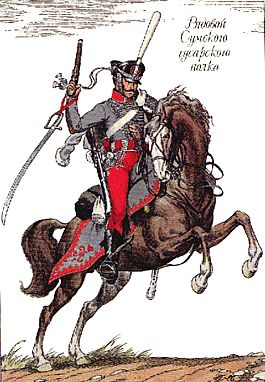
On the eve (in the book) of the Battle of Austerlitz, I did stop and read the Wikipedia article about it, out of pure curiosity. I wasn't concerned about spoilers since it seems likely that Tolstoy would have assumed his readers would be familiar with its outcome. But it was very surprising to read the names of some characters from the book in the article. It is as though in some alternate reality, these characters in a novel were living people. I enjoyed looking at paintings of them as well. I've also been supplementing my reading by doing google image searches on words like "hussar" and "Cossack."

As with Anna Karenina, there are parts of this book that sort of blow me away and that I find myself thinking of over and over again. Unlike Anna Karenina, I don't find it a totally captivating read. But it's captivating enough to be worth it, given that it's also a great work.

Friday, March 19, 2010

The Fantasy of an Uncluttered Life

Tomorrow, assuming we can make it in the snow, Ed and I are headed to our rental cabin for four days of relaxation. I plan to do a lot of math homework, read for hours on end, hang out in a hot tub (for which the snow is a bonus, assuming, again, that we can get to the cabin), eat homemade food, and just generally chill.

Aside from the hot tub and the general beauty of the surroundings,the aspects of this vacation that I'm most looking forward to are theoretically possible at home. No Internet. No TV. (The cabin has one, but I don't plan to use it.) No distractions. A lot of reading. But I wouldn't do that at home.

Sometimes I feel like it's the sheer amount of stuff in my home that keeps me distracted and unproductive. I don't really have that much stuff - we are not hoarders or anything - but I wish I had even less. I have a persistent fantasy of living in a place that is sparse, simple, utilitarian, and not only uncluttered, but incapable of becoming cluttered, by virtue of not containing things that could clutter it.

Some of this is pure fantasy, but I do want to get rid of a number of things before I leave for grad school next year. I have a lot of things I need (or choose to) hang on to, but there are other things I really can get rid of. Some highlights:
  • A few years ago, I got rid of most of my books, and I'm ready to do that again. (I haven't gotten many new books in the interim, I'm just ready for the next stage.) Most of my books I will never read again, so why should I hold onto them? I plan to take these to the library nearby, where they happily accept donations for their various fundraisers.
  • I am finally giving away my saxophone, which I got several years ago, and really enjoyed taking lessons in before I ran out of time and energy for it. This kind of entails giving up the fantasy of playing sax regularly, which feels sad, but it's not as though I couldn't buy a saxophone and take up playing again in the future if I wanted to. I found a local middle school that is, in the words of the band director, "always looking for quality instruments," and I will drop it off there.
  • I have way more pairs of shoes than I need. Most will just go in one of those ubiquitous clothes + shoes donation dumpsters, but I have a couple of new pairs that I got a few years ago but that didn't work out for me. I have scheduled those to go up on eBay.
  • Once I finish the process (begun years ago) of putting my music CDs into binders, my music collection will be reduced to three or four binders, which will take up a lot less space than the gazillion CDs in their original cases did. Most of my music is on the computer anyway.
  • Various old computer equipment can go to Goodwill or a pawn shop or something.
  • I am going to get rid of my tent and sleeping bag. I never, ever go camping.
  • Almost all of my DVDs and videos can go. I won't watch most of them again and it's not hard to rent a movie when you want one.
In addition, here are some things I do not plan on moving with me to a new place:
  • My dining room chairs, which do not match my table either aesthetically or in terms of height, and are just annoying.
  • A couple of my bookcases, which will be empty after the book purge.
  • My entertainment center, video game consoles, DVD player, receiver, speakers, or TV. I could change my mind on this, but for now I think I'm just not going to bother having a TV or any of that in the new place. (If Ed moves with me, we'll probably take this stuff, but I hope not to really have TV service. If I live alone, I think I just won't have any of it.)
  • Most of my framed posters - I don't seem to care about them enough to hang them up, and they're kind of a pain to move. I can always get something else for the walls.
My dining room table and desk are both useful pieces of furniture that can be disassembled into a much more convenient size, so they will stay (unless Mosch decides he wants the desk back). I may get another sparse type of desk - I would like to have one that doesn't have my computer on it at all, since computers are very distracting to me. I'd like a desk like this or this from Ikea.

Here are some other things I plan to keep:
  • My bed (it's great, very comfy, and everyone needs a bed)
  • My clothes (at least the ones that fit)
  • Towels and sheets
  • Kitchen equipment
  • Photo albums
  • Yearbooks
  • Seymour (my first stuffed animal)
  • My filing cabinet and its contents
  • My little nested teak end tables
  • Cat equipment (litter box, carriers, etc.)
That's the plan.

Monday, September 21, 2009

That New-Fangled Printing Press


Slate has an interesting article about two new biographies of Frank Baum, the author of The Wonderful Wizard of Oz. One thing struck me as odd, though. Meghan O'Rourke writes that Baum published Oz in 1900, at the age of 44. After saying that he was a sickly, dreamy child, she continues
But he also reveled in newfangled inventions like the printing press (which, as a teenager, he used to put out a literary journal) and, later, bicycles, Model Ts, and movies.
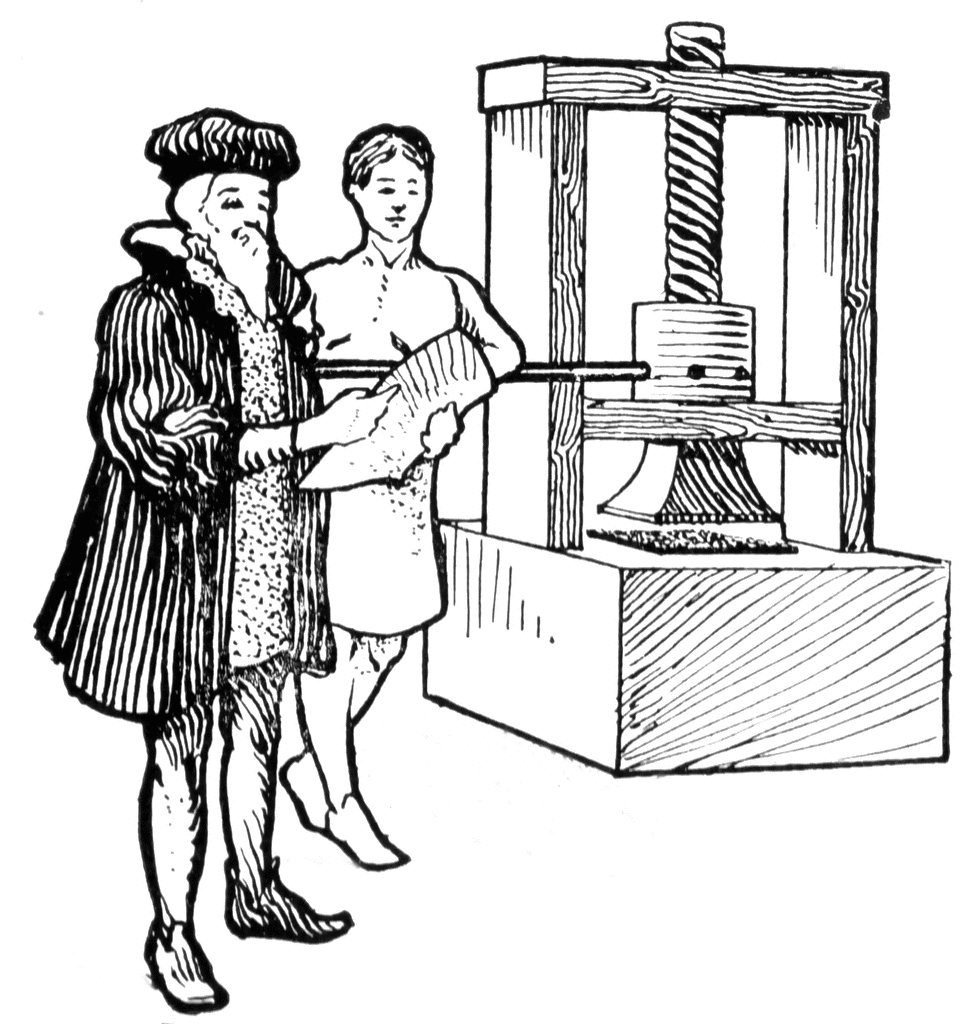
I'm baffled at the suggestion that the printing press would have seemed "newfangled" in the late 1800's. Seriously? It was invented in the 15th century and my scanty knowledge of U.S. history suggests it was commonly in use at least around the time of the American revolution (and most likely before, of course).

What am I missing?

Tuesday, September 01, 2009

My Multicultural Great-Great-Grandmother

One of my Michael Pollan's suggested heuristics for eating is, "Don't eat anything your great-grandmother wouldn't recognize." He uses, as an example, Go-gurt:


which, he speculates, your great-grandmother wouldn't know whether to classify as a food or maybe some kind of balm. He also suggested that, depending on your age, you might need to go back more or less far to find a maternal ancestor who didn't eat the modern western diet.

I decided to go with my great-great-grandmother, and I am also assuming that I had several (this is true, of course) and that they were from a wide variety of cultures (which is probably not true). Since tofu has been eaten for several hundred (possibly thousand) years, it passes muster with my fictional great-great-grandmother, even though I doubt anyone in my actual lineage, above my grandparents, ever ate it.

My fictional GGGM wouldn't recognize some of the ingredients in Go-gurt, such as high fructose corn syrup, tricalcium phosphate, potassium sorbate, or carmine. On the other hand, she would recognize the ingredients of Stonyfield Farm strawberry yogurt: whole milk, strawberries, sugar, pectin, beet juice, natural flavor, and yogurt cultures.

This "rule" (which I'm not following strictly, but more sort of paying attention to) may have some merit on its own, to the extent that foods handed down to us from hundreds of years of culture are well-tested for eating compared to food additives invented in laboratories in this century, but I think it's better as a kind of proxy. Is this a fresh, natural food such as I might make in my own kitchen? If I had these individual ingredients around, would I use them in my cooking?

None of that guarantees healthy eating, of course. But I think, at least for me, trying to cook and/or use fresh, natural foods tends in the direction of healthy eating, because I'm not likely to cure my own ham or start saving up organic bacon grease to cook all of my greens in. My mental image of the kind of cooking and eating I'd like to do is definitely healthy. And it keeps me away from chain restaurant food, which is invariably engineered with mysterious chemicals.

So, thanks, fictional GGGM, for your fantastically healthy, ethnically diverse diet.

Tuesday, August 18, 2009

Review of "In Defense of Food"

I'm currently reading Michael Pollan's book In Defense of Food. Pollan is the guy who wrote The Omnivore's Dilemma (and some other books, of course) and he is basically a proponent of what you might call natural eating - eating regular food-type food that isn't too processed or industrial.

I haven't read any of his other stuff, but I'm really enjoying this book. Even though I haven't learned that much actually new material from it, he does give a different perspective, and the way he writes about food is motivational for me.

One thing he opposes is what he calls "nutritionism" - that is, the culturally prevalent practice of talking about foods as though they are just collections of chemicals that have nutritional consequences. An example he brings up is a government panel or committee of some kind in 1977 that was looking at heart disease, and decided to recommend that Americans eat less dairy and meat, since it was pretty clearly associated with increased risk of heart disease. Of course, the dairy and meat industries freaked the fuck out, and the recommendations were changed to, basically, "avoid saturated fat," even though there wasn't good evidence that saturated fat was the problematic aspect of meat and dairy. But by focusing on invisible chemical aspects of foods rather than on foods themselves, the government could make dietary recommendations without earning the wrath of any particular food industries.

The growth of nutritionism has also, in Pollan's view, fostered the industrial approach to food that has our grocery stores full of boxes and bags. Once it's discovered that antioxidants, or fiber, or Omega-3 acids are healthy, then they can be added to cereals, breads, pasta, yogurts, cookies, and all the other foods that industry churns out for us. A recommendation like "eat more fruit" or "hey how about some green veggies" doesn't foster the same kind of innovation in new products. (And in case it's not obvious, it's a lot easier to make big profits on something like cookies than on something like eggplants.)

He delves into quite a bit of nutrition science himself, a contradiction that he acknowledges. But it's not that he rejects science, including nutritional science, as our best tool to understanding what makes some foods healthier than others. What he rejects is using today's limited science to decide what to eat based on a nutritional perspective. (He's also in favor of the idea that people can suffer from "orthorexia," or an obsession with the healthfulness of foods.)

What's clear to Pollan is that the basic culprit behind the diseases of affluence (obesity, heart disease, diabetes, cancer, etc.) is (besides the small contributing factor of longevity) basically the Western Diet itself. Whenever people living on any kind of traditional diet (of which there are quite diverse kinds in the world) change over to a Western diet they get fat and diabetic and all the rest of it.

So his basic advice is, don't eat the Western diet. He begins the book with the (familiar) advice: "Eat food. Mostly plants. Not too much." The last third (perhaps) of the book is devoted to ideas about how to do this - what he calls "algorithms" and I would call "heuristics." He talks about each part separately - what is "food" (vs. a "foodlike product")? What kind of plants are best to eat (lots of variety; more leaves than seeds)? And what kind of cultures of eating should we follow in order to make food healthy as well as emotionally and socially satisfying?

If I lived fully in accordance with my most basic feelings, I would eat like most of my dad's side of the family eats - a lot of fried chicken and other fast food, chain restaurant fare, the occasional home-cooked spaghetti or hamburger. Most of the other side of my family eat a pretty impressive diet of vegetarian (or near-vegetarian), fresh, from-scratch, vegetable-heavy foods - to such an extent that, while I admire it, it's also hard for me to understand how they can do it. And, of course, my dad's side of my family is markedly more obese and has vastly more health problems than my mom's side.

(My Aunt - my mom's sister - tells a story about when I was little. I visited her during the summer, and she had made some beautiful fresh gazpacho from things she had grown in her own garden. When I went home, I told my mom, "...and all we had to eat was frozen tomato soup!" What's funny to me about the story, and about my Aunt's telling it, is that I would feel exactly the same way now if someone served me gazpacho as a meal.)

So I am kind of trying to use education and knowledge to move myself from my western-diet nature (which has me end up like my dad's family) to a diet more like that of my mom's family (which will help me live longer and in better health). I mean, to be clear, I don't think the difference between the two sides of my family is innate - like genetic or whatever. But growing up as I did, in this place and time, what I want is "the good stuff" - the more fried, refined, salted, sweetened, and processed the better.

So I think Michael Pollan's basis thesis is right, and I am finding the book reasonably motivational. (Some of his stuff also reminded me of Sally's hypothetical Navajo talk about eating.) I recommend reading it, and it also makes a very good companion (obviously up the same alley, yet without much overlap) to The End of Overeating.

Tuesday, July 21, 2009

Madame Bovary vs. Anna Karenina - More Thoughts

I've now finished reading Madame Bovary. I enjoyed it reasonably well. I now can't remember the tone of Anna Karenina as well, so comparing the actual writing in the two books is difficult. There are obvious plot parallels between the books, at least if we only look at the stories of the title characters (AK has more different plot lines).

An obvious plot difference is that the people in AK are of a much higher social stratum. Both books deal with money issues, but very differently. People like the Bovaries are basically invisible in AK, which deals with aristocracy (close up) and peasants (as accessories).

But I guess the biggest difference, for me, is sort of like the difference between where I work now and my old job - the people in Anna Karenina are smart! Anna herself is actually an intelligent, strong woman. (She reminded me of Sally in some parts.) Emma Bovary is...well, not necessarily completely stupid, but definitely weak.

When you read Madame Bovary, it's a bit like watching a horror movie - you want to yell at the characters about the stupid things they are doing. And, of course, you are forced to listen to a lot of rather idiotic dialogue. (I could have done without Homais the Chemist entirely.)

The characters in Anna Karenina are mostly smart and strong, so the things they do fall more easily along a kind of intellectual or moral axis. You watch them make choices that are more moral in nature. And the non-plot conversations in the book are far, far more interesting. Tolstoy seems to actually respect most of the characters, where Flaubert was obviously making fun of many of his.
I wouldn't really tell someone to go read Madame Bovary for fun, though I didn't hate it or anything. I still recommend Anna Karenina to all but the most determined haters of the (broadly-defined) genre.

Monday, June 22, 2009

The End of Overeating

I've finished David Kessler's book "The End of Overeating." It was a pretty short and easy read, and aside from a bit of annoyance over a misdefinition of "heritability", I don't have much to say against it. I guess I'm not sure whether his ideas justified an entire book, as opposed to perhaps a long magazine article.

I did get something new out of it. I had already believed that people are getting fatter because we live in this environment that is full of food engineered to be as delicious as possible that can be obtained and consumed 24/7. I think that's kind of a no-brainer if you have thought about the issue at all. Part of this is the market at work - companies have been motivated to learn how to make tastier and tastier food, while our health is none of their concern - and part is a change in social mores such that snacking anytime, any place no longer seems gauche or inappropriate. (According to Kessler, snacks in America used to be something only children got. And in France, people still don't eat outside of mealtimes.)

But what I hadn't really "gotten" before - although I'd thought of it obliquely from time to time - is the way that these "hyper-palatable" foods act sort of like drugs in setting up a cue/reward/craving cycle. Instead of having a normal relationship to food, a lot of us think about some of our favorite foods all the time, and obsess over them. Plain, enjoyable foods don't trigger these kinds of responses, but the kind of layered/loaded extravaganza foods that are marketed to us do.

I remember as a kid, I used to fantasize about everyone else disappearing from the world. I still think about that sometimes, but as a kid, the first thing I did in this fantasy was go to McDonald's and eat all the french fries I wanted.

On vacations, I am always really interested in what we're going to eat for meals. It's probably the most interesting aspect of most vacations for me.

I moved away from Houston almost 9 years ago and I still obsess over some of the restaurants there.

These are not healthy ways to feel about food. After all, I live in an environment of plenty, and unless the world changes, I should never be threatened with starvation. (Even if my life radically changes for the worse, there are food stamps, food banks, etc., to help me out.) I don't obsess over air or water, so why should I obsess over food?

Kessler doesn't really recommend a "diet" per se (in fact, like most sensible folks, he's into the idea that you're changing your habits forever, not going on some kind of "plan" of limited duration), but the last parts of the book do have recommendations about how to eat better and (possibly) overcome what he calls "conditioned hypereating."

His recommendations aren't very systematic, but they boil down to strictly avoiding hyper-palatable foods (at least while you get them under control), finding healthy foods that are satisfying and enjoyable in appropriate quantities, using rules/planning to guide your eating, not engaging in will power struggles over food with yourself (i.e., using rules to avoid the "I want that / I shouldn't eat that / But I want it / But that's bad" type of inner dialogue), and developing negative attitudes towards hyper-palatable foods (viewing them as the enemy and something you're tricked into wanting, similar to how our view of cigarettes has changed).

I found the advice realistic...maybe too realistic. It did instill the good idea of mentally focusing on changing my relationship to food in this way that would be very positive, but it basically made me feel much more pessimistic about being able to do it. When I finished the book I was pretty much ready to give up on the whole thing and just be fat and food-obsessed instead.

Anyway, I'm basically in favor of the book - I think it raises important issues and has basically sound advice about them. And it was interesting to read.

Thursday, June 18, 2009

David Kessler in Salon

Salon has an interview with David Kessler, former head of the FDA, about his new book "The End of Overeating." He talks in the interview about what (in his view) causes people to overeat, which is basically just conditioning based on our experiences of eating rich food. For instance, he says,

In people who have a hard time controlling their eating, their brain circuits remain elevated and activated until all the food is gone. Then the next time you get cued, you do it again. Every time you engage in this cycle you strengthen the neural circuits. The anticipation gets strengthened. It's in part because of ambivalence. Do you ever have an internal dialogue? "Boy, that would taste great. No, I shouldn't have it. I really want that. And I shouldn't do it."

That sort of ambivalence increases the reward value of the food. It increases the anxiety, it increases the arousal, it keeps it in working memory. We're wired to focus on the most salient stimuli in our environment. For some people it could be alcohol or illegal drugs or nicotine or sex or gambling. For many of us it's food.

He seems to be at least a partial advocate of rules-based eating:

The question is, how have [some people] stayed lean? For many of them the fact is, they're in torment. It's a constant struggle. Others have laid down new learning, and that's made it easier. They develop rules for themselves that they follow. Then, you're not constantly eating in a chaotic, disorganized way. You're not constantly being cued. Your brain's not being constantly activated. But those rules have to be unambiguous, and they're not easy to follow.

In the end, they have what's called a critical perceptual shift. They look at food differently. How do you really cool a stimulus? How do you decrease the anticipation of the food, the power of the food to activate, to grab attention? The answer to that is you view the stimulus differently.

And:
Some people -- and I'm not advocating it -- become vegetarian. That makes it easier. They look at animal fats and proteins and say, "I don't want that." Some people look at food and say, "That's highly processed, I don't want that. I want real food." Some people look at large portions and say, "I don't want that, that looks disgusting."
I find that my no-grains diet is working pretty beautifully. I'm not sure yet whether it will have the desired results (weight loss), but it's definitely making controlling my eating pretty easy. Aside from occasional, brief, intense cravings, I'm not finding it difficult not to eat grains or potatoes. I just don't eat them. There's no wiggle room, no way to start eating the plate of fries Kessler talks about, and so no problem not eating the entire plateful.

My current "rule" is that I can eat grains/starches reasonably freely for one meal per week, I can eat them if no other food is available and I need to eat (which may come into play when, for instance, I visit my vegetarian relatives, who always cook at home), and on geniune special occasions (like cake at a birthday party). "I especially want french fries right now" is not a special occasion.

Anyway, in the usual way that people enjoy information that confirms what they already thought or were doing, I enjoyed the interview.

Wednesday, June 17, 2009

Madame Bovary vs. Anna Karenina

After Sally mentioned being disappointed by Madame Bovary (which I had mentioned in connection with Anna Karenina), I decided to read it again. I read it in high school - 10th or 11th grade - but I didn't remember much except that it was about an adulterous wife. (I hope that's not a spoiler for anyone.)

I haven't finished the book yet - in fact, I haven't gotten to any adultery yet - but it's amazingly different from Anna Karenina. They were published about 25 years apart, and I'm curious if the differences are about changes that happened over that time period or differences between French and Russian culture, or just differences between the authors themselves and their styles.

The difference is hard to characterize. If I'd read MB before AK, I think I would have found it very normal for what it was, and exactly as expected. But having read AK, I'm finding it more difficult to get through. (Let me say explicitly what should be obvious - the books are similar enough in some sense that comparing them makes sense.)

When you read AK, it feels like you really get, on a true psychological level, what is going on with the characters, like you are right in with them. With MB, it's more like looking at a diorama - everything is removed, small, somewhat intricately described but without real "life" to it. Or like the story is wrapped in several layers of tissue paper.

Anna Karenina is just so much more...modern.

Friday, June 12, 2009

Boooooooks

I hope you hear that title in a zombie voice.

I'm running out of books that I know I want to read, and it seems all I do is read recently, so I need recommendations, please. I'm partial to fiction but also enjoy non-fiction, especially social sciences. I don't generally enjoy mysteries, history (though I readily enjoy books written, or set, in the past), or biography.

Help!

Sunday, May 31, 2009

Anna Karenina

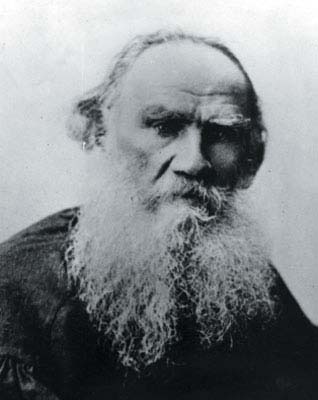
TolstoyTwo or three weeks ago, I started reading (for the first time) Anna Karenina (on my Kindle), and during my just-finished vacation I spent many hours reading and was able to finish it. It feels in some sense hopeless, pointless to write about a classic novel, because there's just no way I could ever say anything about it that hasn't been said, or have any kind of original relationship to it whatsoever. But then that kind of thing has never stopped me before, right?

I've read a lot of novels in what I thought would be roughly the genre of AK. If you'll accept my abuse of the word "genre" I mean, basically, books written in the past that concern relationships between members of the nobility and/or fallen women. Madame Bovary. Edith Wharton. Dickens. So I expected it to fall somewhere into that very broad category.

Instead I was basically blown away by it.

It was, first of all, consistently interesting to read. I thought that it probably would be, because I do like those kinds of books (by which I mean my ill-defined "genre" above, nothing more broad), but it exceeded my expectations. But it was also amazing - philosophical, morally moving, and more psychologically astute than I would have dreamed possible.

People often accuse people of younger generations of believing that their generation invented sex, and I feel I could be accused of this about psychology relative to...well, Tolstoy. I wouldn't have thought the psychological insights of this book could possibly be available to a 19th century Russian. I just wouldn't have.

It's always kind of silly to read a recognized great work and be like, "Hey, actually that book is pretty good," but that's what I'm going to say about it. It fucking rocks. It may be the very best book I have ever read. There were so many times that Tolstoy took me places I had no idea he would go, and then blew my mind.

So, if you have never read Anna Karenina, or if you read it years ago in school and it didn't really do that much for you, and you're open at all to novels of that type (set in the past; having a lot to do with marriages and relationships between members of the nobility), I highly, highly recommend reading it.

Sunday, May 10, 2009

Kindle

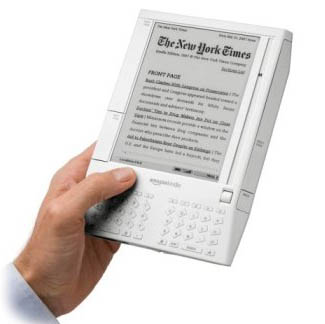
I bought a Kindle a few months ago. (If you've forgotten, this is Amazon's e-book reader.) At first, I pre-ordered a second-generation Kindle, but after a few days, I decided to cancel that order and pick up a used first-generation Kindle, which was a bit cheaper.

It's a hard purchase to justify from an economic standpoint. For roughly $300, you can get books slightly cheaper than otherwise, and with less effort, and read them all on the same device. It would take forever for it to pay off monetarily, and even though reading a Kindle is a lot like reading a book - the print looks very good, it's not a computer-type screen, etc. - it's not quite as nice as actually having a book.

But I really like mine. It has led to me reading a lot more than before, because I always know exactly where the book I'm reading is, it keeps the page for me, and it's just a very consistent experience. I've bought a lot of really cheap books in the public domain (for around $1 each; you can get free editions but they tend to have more errors) that I wouldn't have bothered rooting around used bookstores for.

Also, I absolutely hate the way that books accumulate. I love books, love seeing them on my bookshelves, but hate moving them, running out of space for them, donating them to goodwill, etc. Even though I hate that all my books now look the same (like a Kindle!) and have no physicality, I also love that they are not physical objects taking up space in the environment.

Yesterday, Ed and I spent about 9 hours at his mom's house. Some of the time we spent moving furniture and equipment around, but most of it Ed spent rewiring a bunch of audio/video equipment, stringing wires through the crawlspace, etc. I spent hours and hours sitting around...with my Kindle. I finished one book and started another. And had I run out of books to read, or wanted a different book, I could have purchased one right off the Kindle at any moment.

I can't say whether the Kindle has been worth $300 or not (or whatever I paid for mine, maybe $250). But it's definitely improved my life and I've really enjoyed it. I would buy it again.

Friday, April 03, 2009

Anne of Green Gables

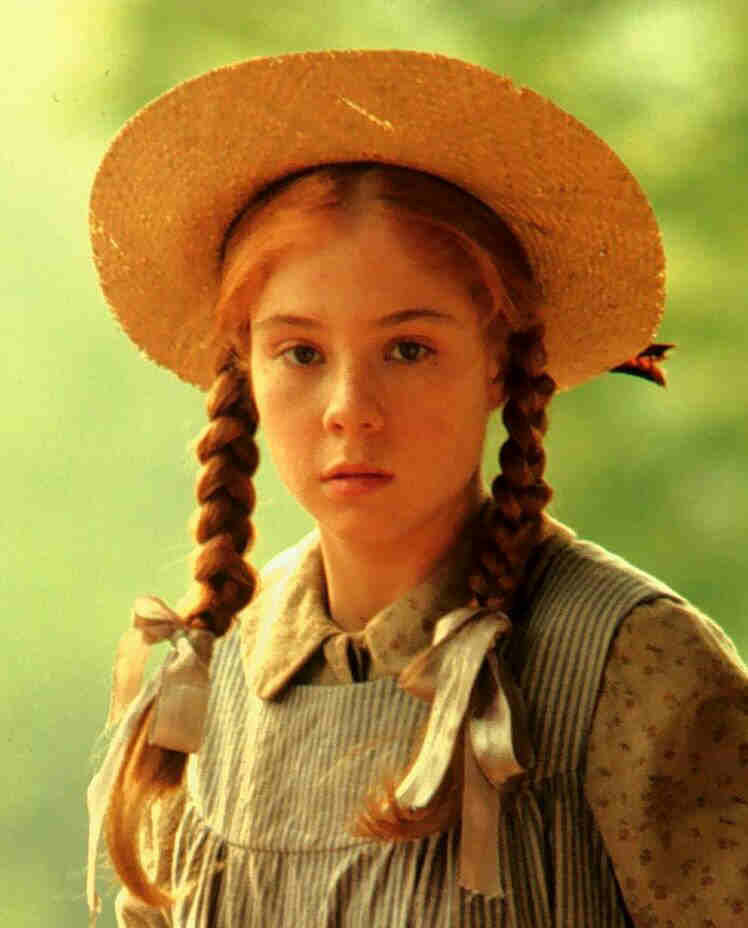
Anne of Green Gables (by Lucy Maud Montgomery) was first published around 1908. It is the story of an orphan girl who comes to live with a middle-aged brother and sister in rural Prince Edward Island. Anne is 11 at the beginning of the book, and 16 at the end of it, and there are several sequels that follow her through the various stages of life.

I'd read the first book before, but lately I've been reading the whole series on my Kindle, and reflecting on how remarkable it is.

The books are kind of simple - this isn't Dickens, but more like children's literature. Anne is feisty and quite imaginative, but she's a very good girl despite all of the scrapes she gets into. The books assume and promote a very basic Protestant morality. To the extent that there is moral conflict in the books, it's between a sort of fuddy-duddy outlook and a more free-spirited one.

But I find two things fairly remarkable. One is that the setting and the way the books progress is kind of historically amazing. There are no slaves, no serfs, and very little in the way of class differences, and Anne is free to pursue her education, vocation, and romantic aspirations as best she can in a friendly world full of opportunities. Oh, people still die of consumption, and ride in horse buggies, but otherwise it's kind of amazingly modern in some sense.

It's also rather astonishing how feminist the books are on a kind of basic level. The patriarchal features of the day are assumed, of course, but so is the idea that women can be intellectuals and academics. When Anne seeks her B.A., some of the adult women of her town disapprove of women going to college, but the surrounding culture is supportive of her doing so, and her years at college are filled with the kind of witty intellectual repartee that I remember from, well, my years at college.

The way that Anne's romantic life is worked out is also pretty cool. If you have any experience reading older novels at all, you'll have a guess within the first 50 pages of the first book about who Anne might end up with, but the way that it works out - the motivations and learning processes of the characters - is a bit interesting and, well, somewhat modern.

Watching Anne mature through the books is really fun. She starts off as a sort of comically exaggerated version of a girl you might imagine reading the book, but becomes really recognizably a person, a young woman, and an adult, as she ages.

All in all, if you're in the mood for some rather wholesome light reading, I can recommend these books heartily.

Friday, July 11, 2008

Book List Meme

I don't really know where this comes from, but here's how it works:

1) Look at the list and bold those you have read.
2) Italicize those you started but did not finish.
3) Underline the books you LOVE. (Note from Tam: I am going to underline any books I did love, even if I don't love them anymore.)
4) Reprint this list in your own blog so we can try and track down these people who’ve read 6 or less and force books upon them.

1. The Time Traveller’s Wife - Audrey Niffenegger
2. The Hitch Hiker’s Guide to the Galaxy - Douglas Adams
3. The Handmaid’s Tale - Margaret Atwood
4. Lord of the Flies - William Golding
5. Life of Pi - Yann Martel
6. The Secret Garden - Frances Hodgson Burnett
7. The Color Purple - Alice Walker
8. Adventures of Sherlock Holmes - Sir Arthur Conan Doyle
9. Jane Eyre - Charlotte Bronte
10. To Kill a Mockingbird - Harper Lee
11. Wuthering Heights - Emily Bronte
12. Nineteen Eighty Four - George Orwell
13. His Dark Materials (trilogy) - Philip Pullman
14. Great Expectations - Charles Dickens
15. Catch 22 - Joseph Heller
16. The Hobbit - J.R.R. Tolkien
17. Catcher in the Rye - J.D. Salinger
18. Brideshead Revisited - Evelyn Waugh
19. Crime and Punishment - Fyodor Dostoyevsky
20. Alice in Wonderland - Lewis Carroll
21. Chronicles of Narnia - C.S. Lewis
22. The Lion, The Witch and The Wardrobe – C.S. Lewis
23. Winnie the Pooh - A.A. Milne
24. Animal Farm - George Orwell
25. Brave New World - Aldous Huxley
26. Of Mice and Men - John Steinbeck
27. On The Road - Jack Kerouac
28. Oliver Twist - Charles Dickens
29. Charlotte’s Web - E.B. White
30. Hamlet - William Shakespeare
31. Charlie and the Chocolate Factory - Roald Dahl
32. Complete Works of Shakespeare
33. Ulysses - James Joyce
34. Heart of Darkness - Joseph Conrad
35. Les Miserables - Victor Hugo
36. Pride and Prejudice - Jane Austen
37. The Bible
38. The Great Gatsby - F. Scott Fitzgerald
39. War and Peace - Leo Tolstoy
40. Grapes of Wrath - John Steinbeck
41. Anna Karenina - Leo Tolstoy
42. The Kite Runner - Khaled Hosseini
43. One Hundred Years of Solitude - Gabriel Garcia Marquez
44. Sense and Sensibility - Jane Austen
45. The Curious Incident of the Dog in the Night-time - Mark Haddon
46. Lolita - Vladimir Nabokov
47. The Little Prince - Antoine De Saint-Exupery
48. A Confederacy of Dunces - John Kennedy Toole
49. The Lord of the Rings - JRR Tolkien
50. Harry Potter series - JK Rowling
51. Little Women - Louisa M. Alcott
52. Tess of the D’Urbervilles - Thomas Hardy
53. Rebecca - Daphne Du Maurier
54. Birdsong - Sebastian Faulks
55. Middlemarch - George Eliot
56. Gone With The Wind - Margaret Mitchell
57. Bleak House - Charles Dickens
58. The Wind in the Willows - Kenneth Grahame
59. David Copperfield - Charles Dickens
60. Emma - Jane Austen
61. Persuasion - Jane Austen
62. Captain Corelli’s Mandolin - Louis De Bernieres
63. Memoirs of a Geisha - Arthur Golden
64. The Da Vinci Code - Dan Brown
65. A Prayer for Owen Meaney - John Irving
66. The Woman in White - Wilkie Collins
67. Anne of Green Gables – L.M. Montgomery
68. Far From The Madding Crowd - Thomas Hardy
69. Atonement - Ian McEwan
70. Dune - Frank Herbert
71. Cold Comfort Farm - Stella Gibbons
72. A Suitable Boy - Vikram Seth
73. The Shadow of the Wind - Carlos Ruiz Zafon
74. A Tale Of Two Cities - Charles Dickens
75. Love In The Time Of Cholera - Gabriel Garcia Marquez
76. The Secret History - Donna Tartt
77. The Lovely Bones - Alice Sebold
78. Count of Monte Cristo - Alexandre Dumas
79. Jude the Obscure - Thomas Hardy
80. Bridget Jones’ Diary - Helen Fielding
81. Midnight’s Children - Salman Rushdie
82. Moby Dick - Herman Melville
83. Dracula - Bram Stoker
84. Notes From A Small Island - Bill Bryson
85. The Bell Jar - Sylvia Plath
86. Swallows and Amazons - Arthur Ransome
87. Germinal - Emile Zola
88. Vanity Fair - William Makepeace Thackeray
89. Possession - A.S. Byatt
90. A Christmas Carol - Charles Dickens
91. Cloud Atlas - David Mitchell
92. The Remains of the Day - Kazuo Ishiguro
93. Madame Bovary - Gustave Flaubert
94. A Fine Balance - Rohinton Mistry
95. The Five People You Meet In Heaven - Mitch Albom
96. The Faraway Tree Collection - Enid Blyton
97. The Wasp Factory - Iain Banks
98. Watership Down – Richard Adams
99. A Town Like Alice - Nevil Shute
100. The Three Musketeers - Alexandre Dumas