The other night in Prob/Stats, before class, some of the students were discussing graduate school. Specifically, they were talking about whether master's programs in math and/or stats involve writing a thesis. I commented that some do and some do not, from what I've seen, and it partly depends on the purpose of the master's.
"Why would you ever write a thesis in math?" asked one woman. "That's weird."
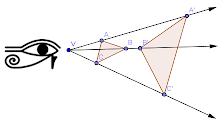
It made me think about how math isn't what people think it is. When I repeated her question to Ed, he asked, "What, does she think math is a solved problem?" But I don't think it's so much that she thinks everything in math is already known as that her conception of math is probably that it is about learning how to solve different kinds of problems.
A lot of fields are not about what you naively think when you have barely any knowledge of them. Psychology is not, as Sally mentioned, all about why people are crazy (or, alternately, about how to make people like you and do what you want by understanding the inner workings of the mind). History is not about learning the timeline of events. English Lit is, for all I know, probably not about writing papers about how the three rooms in the house in a novel represent the holy trinity or whatever. Computer science is not about learning programming languages (much less, as a coworker once asked me, learning how to use Power Point). Even GIS, which was my major at one point, is not about using software to make maps.
However, I'm pretty sure anthropology is about squatting in the dirt with some unknown natives and keeping a diary about their ways, and paleontology is about carefully excavating big dinosaur fossiles, and archaeology is about looking for ancient cities like Troy. Must be.
Friday, November 14, 2008


Wednesday, November 12, 2008
Mad Greens
 Today I ate lunch at Mad Greens, which is one of those new chains that mostly does giant salads. (They also have paninis, soups, chips, and the usual brownies & cookies if you want dessert.) I had never eaten at one of these before, so I wanted to check it out. Even though I don't usually prefer the Giant Salad Meal, it seemed like there might be some good quantity of vegetables involved. So I went.
You can order any salad you want from the ingredients they have, and they also have set combinations that you can order by name. All salads start with a base of either romaine, baby greens, or spinach. I ordered the "Ty Cobb Salad", which has (by default) romaine, tomatoes, bacon, avocado, red onions, and boiled egg. I asked for baby greens instead of the romaine (which looked a bit pallid) - substitutions are no problem. I chose not to pay extra to add a protein (they have a lot of options including tofu, salmon, chicken, and steak of various types), and I chose ranch as my dressing (the recommended one for my salad was spicy bleu cheese).
They make your salad in a giant metal bowl and, if you are eating in, serve it to you in a smaller metal bowl. The salads come in two sizes and I had ordered the larger size. It was pretty big - probably larger than you'd ever make a salad at home, even if you meant it to be your whole meal.
The ingredients in my salad were very good, especially the bacon, which was thick and very bacony. The avocados, bacon, and eggs came in somewhat smaller amounts than you might normally expect in a cobb salad of that size, I thought, but when I ate the salad there seemed to be plenty of all of them. The dressing was good and came in the right amount. (The guy who made it asked me if I wanted a small, medium, or large amount. I asked for medium and he mixed it all into the salad for me. I assume you could also get it on the side if you wished.)
The salad plus iced tea came to about $9. Had I added a protein it would have been $11-14 depending on which one I'd chosen. So those places are definitely not cheap.
Ultimately I did not feel very satisfied by my meal. It was a great salad, but I am not really used to having a giant salad as my whole meal, and either the fact that it wasn't hot food or the lack of protein made it not feel like I had really eaten. (I guess if you consider that salad greens have almost no calories - though they have lots of nice nutrients - my lunch really consisted of a medium-large quantity of ranch dressing and about 1/4 cup each of bacon, boiled egg, and avocado.)
If you like to eat a giant salad and paying $12 or so (which is, after all, what you'd pay for the same thing in a restaurant once you include tip) doesn't bother you, then I'd recommend Mad Greens. I enjoyed the quality and convenience of the food. I probably won't go back there myself, though.
Iron
Ed and I have new arrangement whereby we travel to our local 24 Hour Fitness three times a week. We spend about 25 minutes lifting weights (we are actually using the same chart, designed by me, though naturally we have our own copies and are using different amounts of weight), and then 20-25 minutes doing some kind of cardio.
It makes me so high.
I usually don't really want to go. "Those weights are heavy!" as Mosch used to say. And the 20 minutes on the treadmill afterwards is somewhat torturous. But when I'm finished, I am often filled with a really strong feeling of well-being, and I find that later the same day, or the next day even, I am extra in love with Ed too. We had this conversation a few days ago:
Me: I just realized why I'm so in love with you right now!
Him: You pumped iron.
Me: Yeah. Is that weird?
Him: Nope. I'm all hopped up on endorphins too.
I joked the other day that we don't need to have sex anymore now that we have this instead.
I've gone through periods of doing strength training before, and I remember that I've always really liked it, despite how easy it is to get out of the habit (and despite the ways that it sucks). But I really hope I can remember how directly good this makes me feel, independent of it being good for you or whatever. I swear I fell asleep last night with a smile on my face.
It makes me so high.
I usually don't really want to go. "Those weights are heavy!" as Mosch used to say. And the 20 minutes on the treadmill afterwards is somewhat torturous. But when I'm finished, I am often filled with a really strong feeling of well-being, and I find that later the same day, or the next day even, I am extra in love with Ed too. We had this conversation a few days ago:
Me: I just realized why I'm so in love with you right now!
Him: You pumped iron.
Me: Yeah. Is that weird?
Him: Nope. I'm all hopped up on endorphins too.
I joked the other day that we don't need to have sex anymore now that we have this instead.
I've gone through periods of doing strength training before, and I remember that I've always really liked it, despite how easy it is to get out of the habit (and despite the ways that it sucks). But I really hope I can remember how directly good this makes me feel, independent of it being good for you or whatever. I swear I fell asleep last night with a smile on my face.
Tuesday, November 11, 2008
Dogville
 Ed and I watched Dogville recently. I'd seen (and enjoyed) the movie before, and was keen to have him see it. I remember Sally said something to me before the first time I saw it, which I'd never managed to reply to after I saw it (I think). Specifically, she wrote,
...the majority of reviews I read indicated that the reviewers did not understand what the movie was about even after having seen the whole thing...and when I saw it, I totally agreed. The rest of this post will have Dogville spoilers, so if you haven't seen it and intend to and don't want it spoiled, please stop reading now.
So, the basic plot of the movie is that Kidman's character (Grace) shows up in this mountain town during the Great Depression; she's on the run from some gangsters. The townsfolk decide to let her stay for 2 weeks, and she sets out to prove herself useful by helping everyone. They resist at first, but come to appreciate her help, and all is well for a while.
At some point, though, things start to go bad. Wanted posters appear and the townsfolk use them as an excuse to demand more labor from Grace. She attempts to escape at one point but is thwarted, and after that is more literally enslaved, with a collar and chain connecting her to a bell (so she can be heard) and a giant wheel that she has to drag around. And she's raped by most of the men in the town. (This is a terrible plot summary, but hopefully you've already seen the movie and I'm just refreshing your memory.)
Eventually, her boyfriend in the town calls the number on the card one of the gangsters gave him in the very beginning, hoping that she'll be taken away because she represents a threat to his image of himself as a moral person. When the gangsters show up, we find out that the head gangster is her father. Grace and her dad have a long talk in the car. She starts out on the side of the townsfolk, despite how they've treated her, but after thinking on it some more, decides that the world would be better off without them, and has them all murdered (including their children) and the town burned down.
Now, this is what Roger Ebert (who gave the movie 2 stars out of 4) wrote:
In [director Lars von Trier's] town, which I fear works as a parable of America, the citizens are xenophobic, vindictive, jealous, suspicious and capable of rape and murder. His dislike of the United States (which he has never visited, since he is afraid of airplanes) is so palpable that it flies beyond criticism into the realm of derangement.and
What von Trier is determined to show is that Americans are not friendly, we are suspicious of outsiders, we cave in to authority, we are inherently violent, etc. All of these things are true, and all of these things are untrue. It's a big country, and it has a lot of different kinds of people. Without stepping too far out on a limb, however, I doubt that we have any villages where the helpless visitor would eventually be chained to a bed and raped by every man in town.You can also go see David Edelstein's review for Slate here.
Now I know nothing of von Trier, so for all I know this could have been his exact intention and maybe he really does hate Americans and think we're all assholes. But since I'm looking at the movie and not the director, I don't really care what his intention was; I feel free to judge the movie on its own terms.
Some review I read (which I can't easily locate now, years later) thought that the ending just showed the utter bleakness of human nature, as inevitable crime is inevitably followed by excessive retribution. And I didn't see it that way at all.
Grace offers herself up, Christlike, and she maintains that mien right through the conversation with her father. In that conversation, her father calls her arrogant for refusing to apply the same high standards to others that she does to herself. He calls that the ultimate arrogance. And she rejects this idea, but leaves the car to wander around the town.
The turning point in her thoughts (which the narrator helpfully illuminates for us), and the point that I found really thrilling, is when she shifts from the question "Wouldn't I do the same as them in their place?" to the question "If I acted as they have, would I have any defense for myself? Would I not deserve whatever came upon me?" (These are paraphrases.) It is after this realization that she orders the town destroyed and the occupants killed.
I don't, of course, condone the murder of whole families, whatever crimes the parents might have committed. And the ending is a bit too horrifying in execution to be satisfying, at least to me. But I actually do love the moral reasoning. It's not about whether you're really any better than others; there's an actual standard to which everyone should be held, whether you yourself meet it or not. (There's some Kant for you.) And I like the turning on its head of the Christ idea. It changes from "Forgive them, for they know not what they do" to "Ah shit, the world would just be better off without these assholes, and they deserve it." It's like Noah's flood without, well, Noah. (I guess the dog, the only member of the town who is spared, is Noah, but I don't want to take this analogy too far.)
Also, contrary to Ebert's assertion that hardly anyone will enjoy the movie once, and nobody twice, I did enjoy it thoroughly both times. I find it rather captivating.
Monday, November 10, 2008
Tests Update
I don't usually post test results, but since Sally did I thought I'd go along.
I got my prob/stats test back tonight, and I got a 94%. I thought I had missed up to two questions - one that I just didn't know how to do, and one that I knew how to do except that I got "infinity" as the answer (for an expected value) and that seemed wrong, so I worked on it some more and finally gave up. But infinity was the correct answer, and he gave me credit for it even though I never quite said it was the answer. (I wrote something like "I don't know how to solve this since ln(infinity) -> (infinity)".) The other one I did miss.
Also tonight, I took my test in Discrete. It was probability plus the binomial theorem, and I had all of the material down cold. But the prof put six multi-part questions on the test, many along the lines of, "Explain why xyz," so there was a lot of writing and drawing and solving. And there is one technique that I always, always have problems with (related to generating functions) so that I couldn't solve part of one problem within the time allotted, even though I knew the answer (and wrote it down).
However, only one person had finished on time (and he had finished way early, so perhaps bombed it), so our prof speculated that he had made the test too long and promised to grade the best 5 problems, so I went ahead and left. I didn't, however, have time to full check the rest of my work, and the one question I did check had an obvious error. (No, Tam, 2^4 is not 8. That's 2 times 4.) So I am not as confident as I'd like that my other problems will be all right.
It was kind of an amazing test - it seemed to me that he put together the hardest possible test over the given material. I will probably have an A (if the universe is just), but it was difficult.
I got my prob/stats test back tonight, and I got a 94%. I thought I had missed up to two questions - one that I just didn't know how to do, and one that I knew how to do except that I got "infinity" as the answer (for an expected value) and that seemed wrong, so I worked on it some more and finally gave up. But infinity was the correct answer, and he gave me credit for it even though I never quite said it was the answer. (I wrote something like "I don't know how to solve this since ln(infinity) -> (infinity)".) The other one I did miss.
Also tonight, I took my test in Discrete. It was probability plus the binomial theorem, and I had all of the material down cold. But the prof put six multi-part questions on the test, many along the lines of, "Explain why xyz," so there was a lot of writing and drawing and solving. And there is one technique that I always, always have problems with (related to generating functions) so that I couldn't solve part of one problem within the time allotted, even though I knew the answer (and wrote it down).
However, only one person had finished on time (and he had finished way early, so perhaps bombed it), so our prof speculated that he had made the test too long and promised to grade the best 5 problems, so I went ahead and left. I didn't, however, have time to full check the rest of my work, and the one question I did check had an obvious error. (No, Tam, 2^4 is not 8. That's 2 times 4.) So I am not as confident as I'd like that my other problems will be all right.
It was kind of an amazing test - it seemed to me that he put together the hardest possible test over the given material. I will probably have an A (if the universe is just), but it was difficult.
Saturday, November 08, 2008
Primarily Plants
I wrote earlier about Linda Bacon's book Health at Every Size. I've now finished most of the book. Along with some details and a fair bit of encouragement, Bacon has some pretty simple eating advice:
There is one recipe in the book, for beets, but she does give a little bit of advice, like that if you find vegetables too bitter, roasting them often brings out their sweetness. (Apparently sour tastes like lemon juice also decrease the perception of bitterness. I hate sour and don't seem to taste bitter very strongly, so I'm going to promptly ignore that advice.)
The book has a lot of encouragement that you can change your tastes, and I have found this to be true when I've tried it. If you lay off processed, overly salty and sweet foods for a while, you do learn to appreciate "normal" food more. It's a slightly difficult road to go down, though, at least for me, and the road in the other direction is quite easy. (Taco Bell might taste like crap the first couple of times but then it's delicious! And so easy! And cheap!)
Along with her emphasis that diets don't work ("even if you don't call it a diet!"), Bacon doesn't suggest that you forbid yourself any particular foods. For things that are comparatively energy dense or unhealthy, she suggests monitoring yourself for the point at which pleasure starts to drop off, and listening to that signal, and seeing if you've maybe had enough at that point. And I have found (independent of reading this book) that while I could eat several Twix bars or something, I can also keep a large bar of really good chocolate in my living room and eat very small amounts of it.
The book argues, as I've seen argued elsewhere, that Americans' obsession with protein is misplaced - that we all get plenty and most of us get far more than is necessary. A vegetarian diet is definitely not necessary for health, but a normal vegetarian diet with a variety of foods (not one dominated by sweets) provides plenty of protein.
Honestly, I can never figure out who is right on this protein issue, possibly because I haven't done any real research myself. According to the standard (government-sanctioned?) information about how much protein I should get, it's not automatic that I would get that much from a healthy diet. But that number may be something like enough protein for 98% of people my size (a population that includes men my size who have a lot more muscle), and I don't know what the curve looks like. For that matter, I have no idea how "how much protein X person needs" is calculated in the first place. What are the signs of protein deficiency/sufficiency?
Bacon advises getting some protein and some fat in every meal, for satiety and because (she claims) fat increases nutrient absorption. (She cites studies to this effect, I just haven't looked at them.) She generally advocates not being afraid of fat and not worrying too much about it, but substituting plant for animal fats where possible.
And as I mentioned above, she really does advocate enjoying eating. Her suggestions include not eating while distracted by other things (hard for me; I have a seriously ingrained habit of watching TV while I eat), eating family dinners together, and eating foods that you enjoy (while hopefully training yourself to enjoy more natural, home-cooked foods).
I think that's about as good a summary as I can give about this aspect of the book. I still recommend reading it; it's a pretty easy read in any case.
Enjoy a variety of real food, primarily plants.Each word is important. She emphasizes enjoyment (taking time to savor your food and also learning to enjoy cooking as well as, e.g., shopping at the farmer's market), variety (not eating the same things over and over again), "realness" (staying away from processed foods), and a plant-based diet.
There is one recipe in the book, for beets, but she does give a little bit of advice, like that if you find vegetables too bitter, roasting them often brings out their sweetness. (Apparently sour tastes like lemon juice also decrease the perception of bitterness. I hate sour and don't seem to taste bitter very strongly, so I'm going to promptly ignore that advice.)
The book has a lot of encouragement that you can change your tastes, and I have found this to be true when I've tried it. If you lay off processed, overly salty and sweet foods for a while, you do learn to appreciate "normal" food more. It's a slightly difficult road to go down, though, at least for me, and the road in the other direction is quite easy. (Taco Bell might taste like crap the first couple of times but then it's delicious! And so easy! And cheap!)
Along with her emphasis that diets don't work ("even if you don't call it a diet!"), Bacon doesn't suggest that you forbid yourself any particular foods. For things that are comparatively energy dense or unhealthy, she suggests monitoring yourself for the point at which pleasure starts to drop off, and listening to that signal, and seeing if you've maybe had enough at that point. And I have found (independent of reading this book) that while I could eat several Twix bars or something, I can also keep a large bar of really good chocolate in my living room and eat very small amounts of it.
The book argues, as I've seen argued elsewhere, that Americans' obsession with protein is misplaced - that we all get plenty and most of us get far more than is necessary. A vegetarian diet is definitely not necessary for health, but a normal vegetarian diet with a variety of foods (not one dominated by sweets) provides plenty of protein.
Honestly, I can never figure out who is right on this protein issue, possibly because I haven't done any real research myself. According to the standard (government-sanctioned?) information about how much protein I should get, it's not automatic that I would get that much from a healthy diet. But that number may be something like enough protein for 98% of people my size (a population that includes men my size who have a lot more muscle), and I don't know what the curve looks like. For that matter, I have no idea how "how much protein X person needs" is calculated in the first place. What are the signs of protein deficiency/sufficiency?
Bacon advises getting some protein and some fat in every meal, for satiety and because (she claims) fat increases nutrient absorption. (She cites studies to this effect, I just haven't looked at them.) She generally advocates not being afraid of fat and not worrying too much about it, but substituting plant for animal fats where possible.
And as I mentioned above, she really does advocate enjoying eating. Her suggestions include not eating while distracted by other things (hard for me; I have a seriously ingrained habit of watching TV while I eat), eating family dinners together, and eating foods that you enjoy (while hopefully training yourself to enjoy more natural, home-cooked foods).
I think that's about as good a summary as I can give about this aspect of the book. I still recommend reading it; it's a pretty easy read in any case.
Friday, November 07, 2008
Stats Courses at Metro
For the benefit of anyone who might enjoy browsing course listings at various colleges and universities, I present the complete selection of statistics courses offered at my school, the Metropolitan State College of Denver:
MTH 1210-4 Introduction to Statistics (4 + 0)I am currently taking 3210, and I have also taken 1210 (required for my previous major). I would love to take Probability Theory (4210).
Prerequisites: two years of high school algebra or equivalent and an appropriate score on the mathematics preassessment test
This course is an introduction to the principles and techniques of descriptive statistics, probability, regression analysis, and statistical inference (estimation and tests of hypotheses). Students will work with data on problems related to their own interest or field of study. Credit will not be given for both MTH 1210 and MTH 1230. (General Studies—Level I, Mathematics) (GT—MA1)
MTH 1230-2 Introduction to Probability and Descriptive Statistics (2 + 0)
This course introduces the principles and techniques of probability, descriptive statistics and probability distributions. Students will learn collecting, analyzing, and drawing conclusions from data in their chosen field and using statistical software. This course will not count toward graduation if MTH 1210 is also taken.
MTH 3210-4 Probability and Statistics (4 + 0)
Prerequisites: MTH 2410 with a grade of “C” or better, or permission of instructor
This is a course in the application and theory of the principles of probability and statistics in the sciences and engineering. It includes random variables, probability distributions, sampling, estimation, tests of hypotheses, and regression analysis.
MTH 3220-4 Design of Experiments (4 + 0)
Prerequisites: MTH 3210 and either MTH 2140 or MTH 3140, all with grades of “C” or better, or permission of instructor
This is a course in the application and theory of statistical methods in the sciences and engineering. It includes analysis of variance, factorial experiments, and regression analysis.
MTH 3240-4 Environmental Statistics(4 + 0)
Prerequisites: MTH 1110 and MTH 1210 with grades of “C” or better, or permission of instructor
This is a course in inferential statistics, sampling techniques, and quality control as they relate to environmental issues. Students will work with data and problems related to the environmental science field of study. This course does not count towards a major or minor in mathematics.
MTH 4210-4 Probability Theory (4 + 0)
Prerequisites: MTH 3210 with a grade of “C” or better and senior standing, or permission of instructor
This is a course in the theory of discrete and continuous probability with applications in the sciences and engineering. It includes sample spaces, combinatorial probability, random variables, sets of random variables and random sequences, conditional probability, expectation, and special distributions. It also includes beginning analysis of Markov chains. (Senior Experience)
MTH 4220-4 Stochastic Processes (4 + 0)
Prerequisites: MTH 4210 with a grade of “C” or better, or permission of instructor
This course is an introduction to random processes with applications in the sciences and engineering. It includes examples and properties of stochastic processes, specifically, it includes discrete and continuous Markov processes, the exponential distribution and Poisson process, and other processes including queuing theory.
MTH 4230-4 Applied and Computational Statistics (4 + 0)
Prerequisites: MTH 3220 with a grade of “C” or better, or permission of instructor
This course will cover advanced methods in statistics, including regression and multivariate analysis. Additional topics will be chosen from time series, survival analysis, sampling, bootstrap methods, Taguchi designs, or others chosen by the instructor. The students will use statistical computer packages.
MTH 4290-1 Senior Statistics Project (1 + 0)
Prerequisites: MTH 3210, MTH 3220, MTH 4210, and permission of instructor
In this course, students will apply the statistical techniques covered in previous course work to a real-world situation. The students will write a report containing a description of the problem, statistical tools used, design of experiments, analysis, and results of the study.
Strange Conclusion
Today, BPS Research Digest discusses a finding that people's happiness is more readily increased by small, repeated events like going to the gym than by large, one-time events like winning the lottery. I enjoyed the article, but it did end on an odd note:
So what are the policy implications for this new research. The researchers said single-shot events such as a tax cut will probably have little impact on people's happiness. By contrast, "policies that lead to small but repeated gains are likely to succeed."Talk about shoehorning a study into liberal talking points! Unless we're talking about a tax rebate where the government sends you a big (or, generally, not so big) check, a tax cut is not a large, single-shot event. I mean, the news of a tax cut having been passed might be a single event, but actually keeping more money from each paycheck seems to be an exact example of a "small but repeated gain." No?
Names
In the shower this morning, I was pondering names. I imagined naming a baby girl after one of Obama's daughters. And then I wondered if the name "Barack" will get popular now.
My mind wandered, and I thought about Abraham Lincoln, about how those old testment names like Abraham were popular back then. I wondered how his name affected the election, if at all. Did it sound totally everyday?
Then I thought, "Abraham Lincoln - how could you not elect someone named Abraham Lincoln??" feeling how presidential and good the name sounded.
Because of Abraham Lincoln, of course. Heh.
My mind wandered, and I thought about Abraham Lincoln, about how those old testment names like Abraham were popular back then. I wondered how his name affected the election, if at all. Did it sound totally everyday?
Then I thought, "Abraham Lincoln - how could you not elect someone named Abraham Lincoln??" feeling how presidential and good the name sounded.
Because of Abraham Lincoln, of course. Heh.
Thursday, November 06, 2008
Probability
One thing I've learned a lot about in my Discrete Math class, somewhat inadvertently, is how my fellow students learn and the ways they struggle. There are only twelve of us in the class, and our prof typically does only a little bit of lecturing before having us work on problems and lecture each other. Quite frequently we get sent to the board with markers to write out solutions and, more importantly and unusually, explain things to each other. He will often have several of us explain the same concept for the benefit of the class.
There is, of course, a range of ability within the class, and each person's ability also changes from task to task. Sometimes I have seen other people pick things up more quickly than I do, and at other times I've been stunned as the rest of the class has seemed to turn into morons.
One of the topics my class has really struggled with has been probability. I also had some probability this semester in my Prob & Stats class (as you'd expect), and people seemed to struggle with it there too, though it's not as obvious in a large and non-interactive classroom. But I've heard from some people that, when they took that class, they had no problem with the statistics part, but did badly with probability.
I am no expert at probability and I have learned new things in both of these classes, but probability has always come somewhat easily to me. There seem to be a very small number of principles, and then you just have to figure out how to apply them to the situations in the problems. The principles themselves seem to make logical sense. Because there is a not a lot of fiddly algebra and everything makes logical sense (rather than seeming arbitrary), I do very well with it.
I have guesses about why other people struggle with it. I think one problem is that all the problems are word problems. A couple of students in my prob & stats class were talking once about not being able to figure out what the questions were asking - questions like "What is the probability that no more than 4 valves fail?" And in Discrete, even my professor has struggled to understand the questions sometimes, though he's obviously quite smart.
I think the other problem in probability is that, because it's about applying a few rules to diverse situations, it's not a field of math where you are given extremely specific question types and shown how to solve them. In calculus, for instance, you typically have a section of very similar questions and you are shown methods that always yield the correct results. In probability you really have to analyze the situation and think of equivalences between disparate types of events.
These are just guesses. There have been times when I've really wanted to tear my hair out at the struggles my classmates were having with things that seemed very straightforward to me, and I've had to remind myself that they haven't seemed dumb or underprepared on all topics, but that there is apparently something specifically difficult about probability.
What have your experiences been like?
There is, of course, a range of ability within the class, and each person's ability also changes from task to task. Sometimes I have seen other people pick things up more quickly than I do, and at other times I've been stunned as the rest of the class has seemed to turn into morons.
One of the topics my class has really struggled with has been probability. I also had some probability this semester in my Prob & Stats class (as you'd expect), and people seemed to struggle with it there too, though it's not as obvious in a large and non-interactive classroom. But I've heard from some people that, when they took that class, they had no problem with the statistics part, but did badly with probability.
I am no expert at probability and I have learned new things in both of these classes, but probability has always come somewhat easily to me. There seem to be a very small number of principles, and then you just have to figure out how to apply them to the situations in the problems. The principles themselves seem to make logical sense. Because there is a not a lot of fiddly algebra and everything makes logical sense (rather than seeming arbitrary), I do very well with it.
I have guesses about why other people struggle with it. I think one problem is that all the problems are word problems. A couple of students in my prob & stats class were talking once about not being able to figure out what the questions were asking - questions like "What is the probability that no more than 4 valves fail?" And in Discrete, even my professor has struggled to understand the questions sometimes, though he's obviously quite smart.
I think the other problem in probability is that, because it's about applying a few rules to diverse situations, it's not a field of math where you are given extremely specific question types and shown how to solve them. In calculus, for instance, you typically have a section of very similar questions and you are shown methods that always yield the correct results. In probability you really have to analyze the situation and think of equivalences between disparate types of events.
These are just guesses. There have been times when I've really wanted to tear my hair out at the struggles my classmates were having with things that seemed very straightforward to me, and I've had to remind myself that they haven't seemed dumb or underprepared on all topics, but that there is apparently something specifically difficult about probability.
What have your experiences been like?
Friday, October 31, 2008
Universal Health Care
On Sally's last visit here, I admitted to being more or less in favor of universal health care in America. I had neck surgery last year, and one thing that I said was that, yes, I might have had to wait longer in Canada or the UK (though it's hard to be sure, of course), but if the only reason I don't have to wait longer here is that other people can't get into line at all, that's not such a good thing. I think we actually were talking about knee surgery, but the principle is the same.
I got mocked for this later, but I stand by it.
Sally asked me if I then see health care as fundamentally different from something like a widescreen TV, which people may also want and not be able to afford? And yes, I do. The reason I do is that the thought of not being able to obtain life-saving (or -extending or significantly -enhancing) care is intolerable to me, while the thought of not being able to buy a Hummer or a yacht or a particularly nice piece of wall art or a house is not.
"Intolerable" really has to be judged relative to overall wealth. I would not bankrupt the country by having us provide universal health care to, say, all of Africa, even though the illnesses and deaths of people there are just as real and pressing. Lines have to be drawn for practical reasons. But when a country can afford to meet a vital and universal need, that will otherwise remain largely unmet, I think it ought to do so.
What about food? Well, on a kind of basic level, the vast majority of Americans seem to be able to obtain sufficient food. We do have food stamps, and I'm in favor of that. I would not actually mind if there was "universal food" - maybe some kind of flat government food allowance that everyone could get - but it doesn't seem like it would add much to what we have now. But I do think the government should act to prevent starvation in a rich country like ours.
Health care is different from food in that it's not a fully predictable flat cost type of thing. The cost varies hugely from person to person. And, unlike food, it can be very expensive even by our standards. (Food is expensive for some people in some places, but even high-quality, high-convenience groceries would cost me less than 5% of my gross income.)
It is difficult to get private insurance, at least for a lot of people. Among those not covered by the companies they work for, generally only the older and sicker actually try to buy private insurance, which means it's bound to cost more. Without being part of a "pool" some people just don't make any sense to insure. (Take my dad, for instance. At age 50 he'd had two heart attacks and had uncontrolled Type II diabetes. He could never have been insured profitably at any cost he could have afforded.)
For an individual, it might make sense to try to get a job that comes with insurance, but there are millions of jobs that don't provide it, and someone has to do those jobs. And I don't think forcing more companies to provide more insurance is a good solution at all.
So, despite the problems involved, I am in favor of some kind of more universal solution run by the government. I don't know how it can best be done, so I hope that Obama, if he's able to do this, has good wonks. (I think he actually does; he seems very pragmatic and reasonable in general.)
Going back to the "Would you really want to have to wait six months or a year for a surgery you needed?" question, although I don't think you should vote exclusively based on what you'd personally prefer, I would personally far prefer to live in Canada or the UK in terms of health care, despite that I've always had good insurance and gotten excellent care so far. And I mean that from a purely selfish perspective.
I got mocked for this later, but I stand by it.
Sally asked me if I then see health care as fundamentally different from something like a widescreen TV, which people may also want and not be able to afford? And yes, I do. The reason I do is that the thought of not being able to obtain life-saving (or -extending or significantly -enhancing) care is intolerable to me, while the thought of not being able to buy a Hummer or a yacht or a particularly nice piece of wall art or a house is not.
"Intolerable" really has to be judged relative to overall wealth. I would not bankrupt the country by having us provide universal health care to, say, all of Africa, even though the illnesses and deaths of people there are just as real and pressing. Lines have to be drawn for practical reasons. But when a country can afford to meet a vital and universal need, that will otherwise remain largely unmet, I think it ought to do so.
What about food? Well, on a kind of basic level, the vast majority of Americans seem to be able to obtain sufficient food. We do have food stamps, and I'm in favor of that. I would not actually mind if there was "universal food" - maybe some kind of flat government food allowance that everyone could get - but it doesn't seem like it would add much to what we have now. But I do think the government should act to prevent starvation in a rich country like ours.
Health care is different from food in that it's not a fully predictable flat cost type of thing. The cost varies hugely from person to person. And, unlike food, it can be very expensive even by our standards. (Food is expensive for some people in some places, but even high-quality, high-convenience groceries would cost me less than 5% of my gross income.)
It is difficult to get private insurance, at least for a lot of people. Among those not covered by the companies they work for, generally only the older and sicker actually try to buy private insurance, which means it's bound to cost more. Without being part of a "pool" some people just don't make any sense to insure. (Take my dad, for instance. At age 50 he'd had two heart attacks and had uncontrolled Type II diabetes. He could never have been insured profitably at any cost he could have afforded.)
For an individual, it might make sense to try to get a job that comes with insurance, but there are millions of jobs that don't provide it, and someone has to do those jobs. And I don't think forcing more companies to provide more insurance is a good solution at all.
So, despite the problems involved, I am in favor of some kind of more universal solution run by the government. I don't know how it can best be done, so I hope that Obama, if he's able to do this, has good wonks. (I think he actually does; he seems very pragmatic and reasonable in general.)
Going back to the "Would you really want to have to wait six months or a year for a surgery you needed?" question, although I don't think you should vote exclusively based on what you'd personally prefer, I would personally far prefer to live in Canada or the UK in terms of health care, despite that I've always had good insurance and gotten excellent care so far. And I mean that from a purely selfish perspective.
Confabulous
The Internet makes it easy to get all of your news and analysis from sites that share your worldview, which has the unfortunate tendency to reinforce what you already think, while making your opponents' ideas seem increasingly ridiculous and out of touch with "reality." I find I'm a lot more reasonable and sane (and even relaxed) if I take in information from a variety of sources, including some that come from a different perspective.
I've recently been really enjoying The Confabulum, the group blog of the moderate conservatives behind Culture 11. I can't read blogs like the Corner because so much of what they say is really ridiculous to me, but I can enjoy this level of discourse.
The post "And Then What II" by Conor Friedersdorf is good and representative. An excerpt:
I've recently been really enjoying The Confabulum, the group blog of the moderate conservatives behind Culture 11. I can't read blogs like the Corner because so much of what they say is really ridiculous to me, but I can enjoy this level of discourse.
The post "And Then What II" by Conor Friedersdorf is good and representative. An excerpt:
I’d now like to levy some criticism of my own. The fact is that most conservatives — not all, but most — believe that were their model of society adopted, human suffering would be reduced, not exacerbated or ignored. It is mighty convenient, as Freddie lays out his account of conservatives and suffering, that he ignores the many conservatives who tithe to charity, or build houses for Habitat for Humanity, or participate in Catholic charities, or whose churches adopt communities in Africa, or who donate to secular charities. Don’t they offer a perfectly respectable conservative answer to "And then what?" Who is ignoring human suffering more, those conservatives who give to charity and also favor a limited government and low taxes, or liberals who favor higher government spending on social programs and willingly pay higher taxes, but who don’t themselves donate to any charity? It isn’t so clear, is it. Someone who believes that government is on balance the most efficient or least harmful way to serve the less fortunate is surely justified in advocating for higher government spending. Obviously it makes as much sense for those who are deeply suspicious of government — who in fact believe it often harms the people it is trying to help — to favor alternative means.Anyway, if you're in the market for a conservative blog, check it out.
Thursday, October 30, 2008
Voted
 I voted this morning at my local early vote location. The line was existent but not bad - I think I waited about 20 minutes. The machine seemed to work fine, though it is a receipt-free electronic touch screen thing, so there's no way to know if it actually recorded my vote properly. I would never choose this as a voting system, but without evidence of actual wrongdoing or systematic malfunctions, I'm not going to worry about it. It was certainly convenient and easy to use.
I voted for Obama and I voted Democrat for the Congresscritters. I voted to retain and not retain judges in accordance with the committee's recommendations. I skipped several of the very local races where I know nothing about the candidates; I decided to let the people who are more informed (or more partisan, or whatever) decide those races.
I voted no on most of the ballot measures.
I voted against letting the gambling towns vote to have longer hours and higher-stakes games with most of the money going to fund community colleges.
I voted against making employers have good reasons for firing people.
I voted against something that was supposed to give more money to help the disabled.
I voted against higher severance taxes on oil and gas.
I voted against prohibiting affirmative action by the state. (Correction: I actually can't remember how I voted on this. I was torn.)
I voted against defining "person" in the Constitution to include fertilized eggs, embroys, and fetuses.
I voted against disallowing local governments from taking automatic deductions from paychecks except for legally required things. (This is about unions. I've intuited from the various ads that some firefighters and other public servants get union dues automatically withdrawn, though they can opt out if they wish. The new bill would have prohibited that. I decided not to prohibit it.)
I voted FOR making it illegal to require someone to be in a union to work at a certain place.
I voted against holding company executives criminally responsible for the criminal acts of their companies.
I voted against some very complicated thing about funding education. (This offensive TV ad about it didn't help.)
I voted against requiring companies with more than 20 employees to provide health insurance.
I voted against requiring companies to provide a safe working environment and making it easier for lawsuits to be filed if a worker is injured.
So, basically, I voted Democrat on the national parts of the ticket, and on some state races, and then voted against the common man for most local measures. Or something.
Monday, October 27, 2008
Advantages of a Log Scale
One option that Excel has, and that I imagine most graphing software has, is to convert one of the scales from the regular linear scale to a logarithmic one. In a logarithmic scale, the equally-spaced intervals represent powers of 10.
In the oil industry, we use log scale charts quite a lot, and they often make the data more sensical. Today I made the following scatter plot, which shows the oil to gas ratio for some wells in Oklahoma. The x axis represents how long the well has been running, so the idea is to see how these ratios might change over time, and how they vary from well to well. It came out like this (get a bigger image by clicking):
 This is obviously not acceptable as a graph. The couple of really high values near the top edge make all of the more normal values clump together at the very bottom. And no matter how much I limit the range of the y axis, I get basically the same effect. Here I've limited it to 2000, which cuts off some data points:
 It's better, but it's still not great. Then I tried a log scale:
 And voila. Suddenly this data makes sense.
Log scales are a bit tricky for people to read, so it does help to add the minor gridlines.
 The spacing of the minor gridlines helps remind you how the scale works, and you can also use them as a guide. The line immediately above 1000 is 2000, then the next one is 3000, etc., and they are spaced accordingly.
I love these types of data representation issues and when I make a display that is more intelligible than it might have been, it makes me really happy and proud.
In the oil industry, we use log scale charts quite a lot, and they often make the data more sensical. Today I made the following scatter plot, which shows the oil to gas ratio for some wells in Oklahoma. The x axis represents how long the well has been running, so the idea is to see how these ratios might change over time, and how they vary from well to well. It came out like this (get a bigger image by clicking):
 This is obviously not acceptable as a graph. The couple of really high values near the top edge make all of the more normal values clump together at the very bottom. And no matter how much I limit the range of the y axis, I get basically the same effect. Here I've limited it to 2000, which cuts off some data points:
 It's better, but it's still not great. Then I tried a log scale:
 And voila. Suddenly this data makes sense.
Log scales are a bit tricky for people to read, so it does help to add the minor gridlines.
 The spacing of the minor gridlines helps remind you how the scale works, and you can also use them as a guide. The line immediately above 1000 is 2000, then the next one is 3000, etc., and they are spaced accordingly.
I love these types of data representation issues and when I make a display that is more intelligible than it might have been, it makes me really happy and proud.
Sunday, October 26, 2008
Health at Every Size

Right now I am reading Health at Every Size by Linda Bacon. Apparently Health at Every Size (HAES) is a general movement, of which Bacon is a part. The book essentially argues that you are unlikely to succeed at intentional weight loss over the long term, and that trying to do so might harm rather than improve your health, but that you can improve your health regardless of your size by other measures.
I haven't finished the book, so I won't try a full review, but although it's written at a fairly low level (similar to diet books in general) and is slightly polemical, I have only minor quibbles with what I've read so far. Bacon is an actual researcher with the kind of credentials you'd want to see. There are hundreds of citations throughout the text so that if she asserts something, you can easily investigate if you're so inclined. I think the book is worth reading whether you end up agreeing with its conclusions or not.
Bacon and some other researchers who are much more supportive of weight loss did a study in which they enrolled 78 (I think) overweight women and put them into two groups. Both groups met once per week for six months (divided into smaller support groups of 9 or 10 people), and then once a month for six months. One group followed a HAES approach and the other was a standard diet and exercise group.
After two years, neither group had lost any weight, but the HAES group had several measurable health improvements (things like fitness, cholesterol levels, and blood pressure), while the only statistically significant change among the dieting group was self-esteem, which went down.
This was, of course, only one study.
Overall, I find this approach appealing. I have lost a lot of weight (over 60 lbs) intentionally in the past, but I've regained a lot of it over time. I know that the key to maintaining the loss is to get a lot of exercise and maintain a constant focus on it, and I can't seem to do that at all right now - especially the "maintain focus" part. I can't seem to do anything systematic about my weight for more than about a week at a time.
What I can do (and I'm just starting the actual recommendations part of the book, so I'm now just writing about my own experience) is exercise and include more fruits and vegetables in my diet regardless of what or how much I am eating in general. And for now that's working out pretty well. I've got Ed going to the gym with me three times a week (which I generally enjoy a lot even though it's easier not to go) and I'm regularly eating pretty high amounts of fruits and veggies. (I'd say I average about 5 or 6 servings a day, which is not super high, but is at least within recommendations.)
I don't know. If I continue to inexorably gain weight I may have to revisit the idea of intentional weight loss. But if I can maintain some weight or other and increase my fitness to a normal level while eating a somewhat healthy diet, that might be a better approach for me.
Thursday, October 23, 2008
Ballot Issues
I'll be voting any day now (hopefully before election day), so the other day I sat down with the government-provided booklet that is mailed to voters describing the various ballot measures I get to vote on, and giving recommendations on retention of judges. (Surprisingly, one of the judges was strongly recommended NOT to be retained. That was fun reading.)
One proposition I get to vote on, Amendment 48, would alter the Colorado Constitution to define the word "person" to include fertilized eggs, embryos, and fetuses. Obviously I will be voting no on that.
A lot of the other measures have a deep similarity based on the TABOR bill that is active here. That stands for "Taxpayer Bill of Rights" and it says that, basically, the state government is not allowed to grow by more than inflation, and any extra tax money collected has to be refunded every year.* Any spending that wants to be exempt from TABOR has to be approved specially by voters.
So we get a million of those every election cycle.
For instance, Amendment 50 would allow the cities in which gambling is allowed to vote to extend the hours and/or the types of games that are allowed and, if they do so, the extra money collected would be allocated 22% to those cities and 78% to community colleges, and it would be exempt from TABOR. It is being billed as a way to increase funding for our community colleges "without a tax increase." Of course, the money for this does in fact come from additional taxes (it's not free money from heaven), but I suppose it's not an increase in the rate of a tax.
Or there is Amendment 59, which ballotpedia says "would create a state education fund savings account within the state education fund, to be funded from 10% of the monies deposited into the state education fund, including revenue that would otherwise be rebated under the TABOR rules, which the measure calls for diverting to the state education fund; would also require that state educational spending increase by rate of inflation plus 1% through fiscal year 2010-2011; and restricts spending of the state education fund to specific education expenses ."
I honestly don't know how to vote on these things. I mean, if they had one that said senior citizens would be charged extra for eyeglasses and that money would be allocated to a special fund to provide extra pet waste collection bags in city parks, exempt from TABOR, I would vote no. But I don't intrinsically object (in the case of Amendment 50) to longer gambling hours, local control, or funding community colleges. Except that all of these different bills make it impossible for someone (the legislature, I suppose) to sit down and figure out the state budget in a rational manner. I don't want all kinds of unnecessary money (which is, again, not free money from heaven) overfunding a bunch of pet projects.
Should I abstain from voting on things I'm not sure about, allowing those who feel more strongly to control the outcomes, or should I guess that my own guesses or gut feelings are better than (or at least equal to) the firmly held opinions of people who might be simple-minded morons or ideologically opposed to me? Or should I vote "no" on things I'm not sure of, out of some general conservative instinct? (Or, as my mother once told me, "yes" because "if someone thinks it's a good idea, it probably is.") I feel an internal pressure to vote on every issue.
As far as the Presidential race goes, I am unequivocally in favor of Obama. On social issues, which are important to me, I am firmly liberal, and the Republicans of the past 8 years have done nothing to shrink the size of government (quite the opposite), which is the only thing I might (might) favor about them. They've ramped up federal spending crazily and at least Bush and Cheney have fought for (I can't even say "argued for" since they have hardly bothered to inform the rest of us) untrammeled executive power completely out of line with what the Constitution actually says. McCain was my favorite Republican in the primaries, but I haven't liked much that I've seen since. And his completely cynical and insulting choice of Sarah Palin, who started off seeming underqualified and is now shown to be incapable-of-becoming-qualified (IMO) for VP...well, it doesn't help. And, outside of his trade protectionism, I see nothing to dislike in Obama.
I'm looking forward to watching the results Nov 4.
(*Disclaimer for this whole post - I am not an expert on Colorado law and have not done extra research to ensure accuracy. If you are seriously concerned about the specifics of anything you read here, please do your own research. I am quite likely simplifying or outright wrongifying some of it.)
One proposition I get to vote on, Amendment 48, would alter the Colorado Constitution to define the word "person" to include fertilized eggs, embryos, and fetuses. Obviously I will be voting no on that.
A lot of the other measures have a deep similarity based on the TABOR bill that is active here. That stands for "Taxpayer Bill of Rights" and it says that, basically, the state government is not allowed to grow by more than inflation, and any extra tax money collected has to be refunded every year.* Any spending that wants to be exempt from TABOR has to be approved specially by voters.
So we get a million of those every election cycle.
For instance, Amendment 50 would allow the cities in which gambling is allowed to vote to extend the hours and/or the types of games that are allowed and, if they do so, the extra money collected would be allocated 22% to those cities and 78% to community colleges, and it would be exempt from TABOR. It is being billed as a way to increase funding for our community colleges "without a tax increase." Of course, the money for this does in fact come from additional taxes (it's not free money from heaven), but I suppose it's not an increase in the rate of a tax.
Or there is Amendment 59, which ballotpedia says "would create a state education fund savings account within the state education fund, to be funded from 10% of the monies deposited into the state education fund, including revenue that would otherwise be rebated under the TABOR rules, which the measure calls for diverting to the state education fund; would also require that state educational spending increase by rate of inflation plus 1% through fiscal year 2010-2011; and restricts spending of the state education fund to specific education expenses ."
I honestly don't know how to vote on these things. I mean, if they had one that said senior citizens would be charged extra for eyeglasses and that money would be allocated to a special fund to provide extra pet waste collection bags in city parks, exempt from TABOR, I would vote no. But I don't intrinsically object (in the case of Amendment 50) to longer gambling hours, local control, or funding community colleges. Except that all of these different bills make it impossible for someone (the legislature, I suppose) to sit down and figure out the state budget in a rational manner. I don't want all kinds of unnecessary money (which is, again, not free money from heaven) overfunding a bunch of pet projects.
Should I abstain from voting on things I'm not sure about, allowing those who feel more strongly to control the outcomes, or should I guess that my own guesses or gut feelings are better than (or at least equal to) the firmly held opinions of people who might be simple-minded morons or ideologically opposed to me? Or should I vote "no" on things I'm not sure of, out of some general conservative instinct? (Or, as my mother once told me, "yes" because "if someone thinks it's a good idea, it probably is.") I feel an internal pressure to vote on every issue.
As far as the Presidential race goes, I am unequivocally in favor of Obama. On social issues, which are important to me, I am firmly liberal, and the Republicans of the past 8 years have done nothing to shrink the size of government (quite the opposite), which is the only thing I might (might) favor about them. They've ramped up federal spending crazily and at least Bush and Cheney have fought for (I can't even say "argued for" since they have hardly bothered to inform the rest of us) untrammeled executive power completely out of line with what the Constitution actually says. McCain was my favorite Republican in the primaries, but I haven't liked much that I've seen since. And his completely cynical and insulting choice of Sarah Palin, who started off seeming underqualified and is now shown to be incapable-of-becoming-qualified (IMO) for VP...well, it doesn't help. And, outside of his trade protectionism, I see nothing to dislike in Obama.
I'm looking forward to watching the results Nov 4.
(*Disclaimer for this whole post - I am not an expert on Colorado law and have not done extra research to ensure accuracy. If you are seriously concerned about the specifics of anything you read here, please do your own research. I am quite likely simplifying or outright wrongifying some of it.)
Wednesday, October 22, 2008
My Haircut
It's been a few weeks since I shaved my head. Since then, I've trimmed the hair down to 1/4" (I think) with the trimmer I have at home (a heavy industrial seeming thing that is pretty delightful to use), and then I got a professional trim at Great Clips, to 3/8", with a decent neck and around-the-ears shave. (They charged me $5. Woot!)
(Also amusing: they have me in their computer there, so when I gave the woman my phone number, and she looked it up, she looked at me and said, "So I guess you're not going with the bob anymore!")
 So my head is plushy-soft all over, just short enough to still stick out in every direction and not fall down into a regular boy-type haircut. It is just slightly shorter than cutie Matt Damon's over there.
I fucking love it. I am right now at the point of thinking I will never change it against because, just, why? It's awesome.
Before I shaved my head, I was afraid it would look bad. And frankly, one of the fears I had was that skinny girls can get away with having a shaved head or very short hair, but it looks bad on fat girls. And of course, the truth is, cute skinny girls will usually look cute in almost any style. It's like Matt Damon up there - what kind of haircut would make him not hot? He starts off hot and that's a huge boon.
But I'm starting to think that a crew cut is actually a comparative advantage for a fat woman, if you don't mind looking butch. Because my observation about myself is that I am a lot better looking as a butch than as a femme. I am not really either one - a butch or a femme. But my old hairstyle was a regular girl type of cut, and this one is distinctly butch. (I suspect that on a skinny girl, a haircut like this might give you kind of a "pixie" look and not be so butch.)
The net effect on my appearance as judged by other people might still be negative, because being butch might be negative in the eyes of many. But among people who like both looks, I have to think this makes me more attractive. I certainly look more attractive to myself, and to Ed.
Last night at the gym, I picked up a couple of hand weights to do some bicep curls, and then happened to see myself in the mirror. I was wearing a sleeveless shirt. And I looked incredible. The combination of the weights and the shirt and the short hair - it was crazy butch and I just loved it. I felt super macho.
I have a slight inclination to scoff at women who claim they make some traditionally supported beauty decision (like surgical breast augmentation) not to please others but because it makes them feel more confident, but that's how I feel about the hair style. It makes me feel attractive and strong. And I'm going to keep it.
(Also amusing: they have me in their computer there, so when I gave the woman my phone number, and she looked it up, she looked at me and said, "So I guess you're not going with the bob anymore!")
 So my head is plushy-soft all over, just short enough to still stick out in every direction and not fall down into a regular boy-type haircut. It is just slightly shorter than cutie Matt Damon's over there.
I fucking love it. I am right now at the point of thinking I will never change it against because, just, why? It's awesome.
Before I shaved my head, I was afraid it would look bad. And frankly, one of the fears I had was that skinny girls can get away with having a shaved head or very short hair, but it looks bad on fat girls. And of course, the truth is, cute skinny girls will usually look cute in almost any style. It's like Matt Damon up there - what kind of haircut would make him not hot? He starts off hot and that's a huge boon.
But I'm starting to think that a crew cut is actually a comparative advantage for a fat woman, if you don't mind looking butch. Because my observation about myself is that I am a lot better looking as a butch than as a femme. I am not really either one - a butch or a femme. But my old hairstyle was a regular girl type of cut, and this one is distinctly butch. (I suspect that on a skinny girl, a haircut like this might give you kind of a "pixie" look and not be so butch.)
The net effect on my appearance as judged by other people might still be negative, because being butch might be negative in the eyes of many. But among people who like both looks, I have to think this makes me more attractive. I certainly look more attractive to myself, and to Ed.
Last night at the gym, I picked up a couple of hand weights to do some bicep curls, and then happened to see myself in the mirror. I was wearing a sleeveless shirt. And I looked incredible. The combination of the weights and the shirt and the short hair - it was crazy butch and I just loved it. I felt super macho.
I have a slight inclination to scoff at women who claim they make some traditionally supported beauty decision (like surgical breast augmentation) not to please others but because it makes them feel more confident, but that's how I feel about the hair style. It makes me feel attractive and strong. And I'm going to keep it.
Terrestrial Critter
One of the blog I subscribe to is NASA's Astronomy Picture of the Day, and over time I have noticed something about my responses to the pictures they have there, to wit: I am basically bored by pictures of stars or other space objects (galaxies, nebulae, etc.), but vastly interested in pictures that show planets or landscapes.
For instance, boring:

interesting:

pretty but boring:

fascinating:

intriguing:

gorgeous:

I'm not sure why there is such a disparity in how I view these.
For instance, boring:
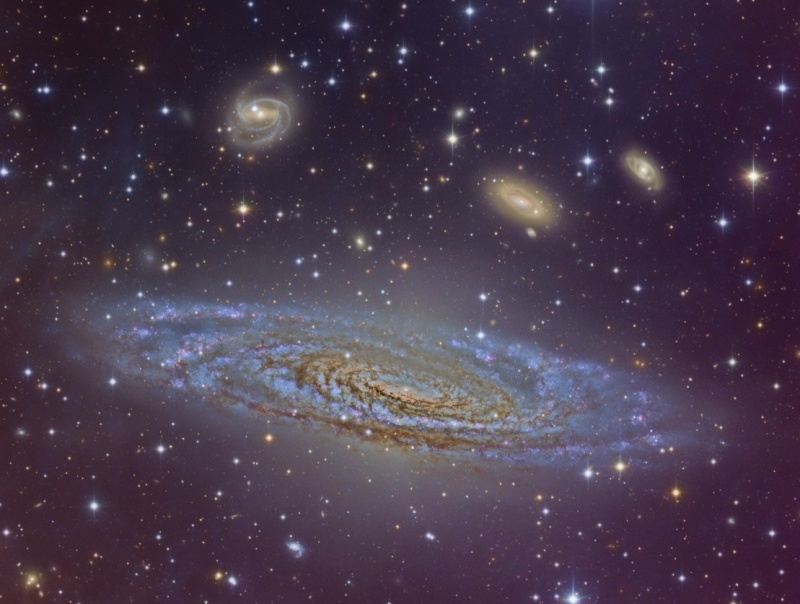
interesting:

pretty but boring:

fascinating:
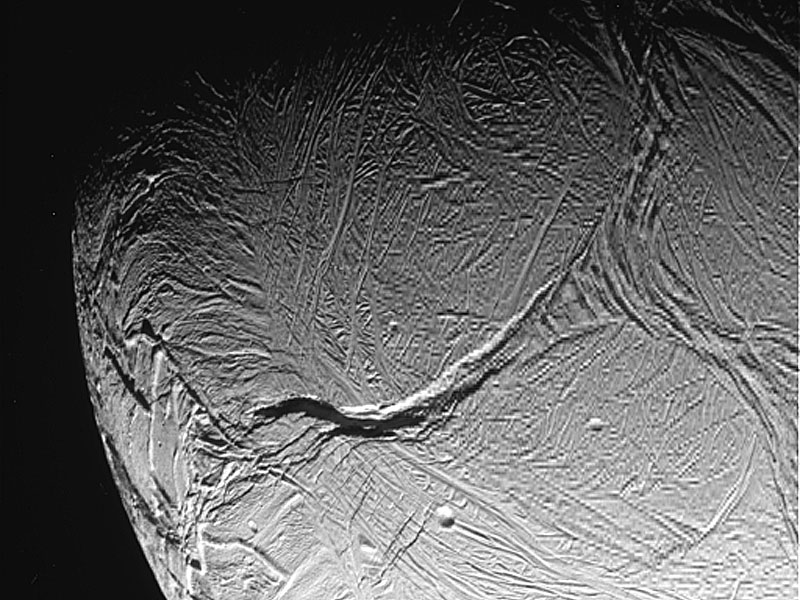
intriguing:

gorgeous:

I'm not sure why there is such a disparity in how I view these.
Monday, October 20, 2008
Can't Be Much To It
Ed has a friend (who I guess by now is my friend too) who is very down on software engineering. Software engineering isn't about how to write code - it's more about how to manage and run software projects. So it is partly about how to write code, but it's more about the general procedural aspects of how to write code (e.g., is it better to code in pairs? what kind of coding standards should be in place? how does a group manage working on code together? how can we make sure we're building what the client wanted?) than on things like how to craft the perfect algorithm.
Anyway, Adam basically thinks software engineering, at least as currently taught/practiced is full of shit. He had one course in it in college and what he learned was, he felt, a lot of "buzzwords." He later had to regurgitate these in interviews, and found that basically doing some reading on Wikipedia was enough to satisfy the demands of this process. ("Oh, I'm supposed to know what 'agile' means, fine...")
There are a lot of buzzwords, you could say, in business in general, but there are also stark differences in methodologies. I'm sure (as Ed pointed out to me) that "assembly line" was once a buzz word. It's also a significant, radical way to manufacture things. And if you're going to make up new ways of doing things, then assigning words to them enables discussion, right? So if I've decided that these five or so factors are key to the way I want to work in a team to program something, and I name that style "Extreme Programming" (or XP) then is that wrong?
And if I wanted to go to work for a company that practiced XP, it's reasonable to think I should know the term, right? And have an opinion about it? Or concerns and questions about the actual implementation. I should know whether I love or hate or am curious to try pair programming, for instance.
I feel like Adam's dismissal of "buzzwords" in software engineering is related to a general tendency that some people have to assume that, if they don't know much about something, there must not be much to it. Some things, like brain surgery, seem intrinsically complicated and aren't subject to this phenomenon, but other things, like sociology, get no respect. What, don't they just write papers about how people act just like anyone with any common sense would think they'd act?
I imagine most fields have their bullshitty elements. There are probably buzzwords in reinforced concrete structure design. But I try really hard not to assume that academic disciplines have nothing to them, just because I know nothing about them, because I've found that usually, the more you learn about a field, the more you see it expand before you into something deep and rich with detail.
Anyway, Adam basically thinks software engineering, at least as currently taught/practiced is full of shit. He had one course in it in college and what he learned was, he felt, a lot of "buzzwords." He later had to regurgitate these in interviews, and found that basically doing some reading on Wikipedia was enough to satisfy the demands of this process. ("Oh, I'm supposed to know what 'agile' means, fine...")
There are a lot of buzzwords, you could say, in business in general, but there are also stark differences in methodologies. I'm sure (as Ed pointed out to me) that "assembly line" was once a buzz word. It's also a significant, radical way to manufacture things. And if you're going to make up new ways of doing things, then assigning words to them enables discussion, right? So if I've decided that these five or so factors are key to the way I want to work in a team to program something, and I name that style "Extreme Programming" (or XP) then is that wrong?
And if I wanted to go to work for a company that practiced XP, it's reasonable to think I should know the term, right? And have an opinion about it? Or concerns and questions about the actual implementation. I should know whether I love or hate or am curious to try pair programming, for instance.
I feel like Adam's dismissal of "buzzwords" in software engineering is related to a general tendency that some people have to assume that, if they don't know much about something, there must not be much to it. Some things, like brain surgery, seem intrinsically complicated and aren't subject to this phenomenon, but other things, like sociology, get no respect. What, don't they just write papers about how people act just like anyone with any common sense would think they'd act?
I imagine most fields have their bullshitty elements. There are probably buzzwords in reinforced concrete structure design. But I try really hard not to assume that academic disciplines have nothing to them, just because I know nothing about them, because I've found that usually, the more you learn about a field, the more you see it expand before you into something deep and rich with detail.
Monday, October 13, 2008
Discrete Math
One of my classes this semester is Discrete Math. I ended up in this class because of a scheduling problem. I originally had Linear Algebra MW 5:00-6:50, and then Prob & Stats 7:00-9:00. Unfortunately, my linear algebra class was cancelled, leaving me just the one class. I decided that an extra math class is always a good thing, and signed up for Discrete Math in the empty slot.
I didn't actually know what Discrete Math was, I think.
The "discrete" in discrete math contrasts basically with the continuity of, e.g., calculus. When we deal with functions, we are mostly dealing with functions in the natural numbers (1, 2, 3, ...). There are things like set theory, combinatorics, probability, and graph theory.
One of the most challenging topics for me so far has been recursively defined relations. These are things like, for instance, the Fibonacci sequence,
1, 1, 2, 3, 5, 8
where each number is the sum of the previous two.
We've been learning different techniques for determining the "closed form" rule for such a sequence, which allows you to do something like calculate the 100th term without calculating all of the ones in between. (The "closed form rule" is what you usually get for a function, like f(x) = x + 3, instead of it being defined in terms of the previous term or terms.)
So far, the class is very interesting. There are about 12 students, so they all become familiar pretty quickly, and our professor includes a lot of class discussion and has us lecture each other at the board a fair amount by asking questions like, "Can anyone come up here and explain why this makes sense?" or "Would someone repeat what I just said in a different way?"
I didn't actually know what Discrete Math was, I think.
The "discrete" in discrete math contrasts basically with the continuity of, e.g., calculus. When we deal with functions, we are mostly dealing with functions in the natural numbers (1, 2, 3, ...). There are things like set theory, combinatorics, probability, and graph theory.
One of the most challenging topics for me so far has been recursively defined relations. These are things like, for instance, the Fibonacci sequence,
1, 1, 2, 3, 5, 8
where each number is the sum of the previous two.
We've been learning different techniques for determining the "closed form" rule for such a sequence, which allows you to do something like calculate the 100th term without calculating all of the ones in between. (The "closed form rule" is what you usually get for a function, like f(x) = x + 3, instead of it being defined in terms of the previous term or terms.)
So far, the class is very interesting. There are about 12 students, so they all become familiar pretty quickly, and our professor includes a lot of class discussion and has us lecture each other at the board a fair amount by asking questions like, "Can anyone come up here and explain why this makes sense?" or "Would someone repeat what I just said in a different way?"
Thursday, September 18, 2008
Shaving, Parents
As many of you know, I shaved my head last week. It was pretty much a whim - I've kind of always wanted to know what I would look like with really short hair, and Ed thought it would be a cool idea, so we did it. (He actually bet me I wouldn't do it - he doesn't think I'm very impulsive. I made him give me 5:1 odds before I would. But, no, I didn't cut my hair off for $5. That was just a bonus.)
I think it looks kind of awesome. I definitely look butch. People at work were surprised, some feared I had cancer (oops), and some were amused. My boss asked (in an email) if she could rub my head, but I told her I was not lucky like the Buddha. When I see myself in the mirror, it makes me smile.
And Ed loves it. He confessed that, had I had my head shaved the night he met me, he might have been too intimdated by my attractiveness to talk to me. What's weird is, when he says it I actually believe it. (If you know me, you'll understand it is not too often that people are put off by my intimidating beauty.)
So, the day after I shaved it, I let my mom know. She said she hoped I was kidding and, when I said I wasn't, she said, "No comment."
On Tuesday, I posted pictures to my Facebook page. They just show me in a t-shirt with my shaved head - nothing weird. But apparently it was more than my mom could take. She sent me the following email:
I think it looks kind of awesome. I definitely look butch. People at work were surprised, some feared I had cancer (oops), and some were amused. My boss asked (in an email) if she could rub my head, but I told her I was not lucky like the Buddha. When I see myself in the mirror, it makes me smile.
And Ed loves it. He confessed that, had I had my head shaved the night he met me, he might have been too intimdated by my attractiveness to talk to me. What's weird is, when he says it I actually believe it. (If you know me, you'll understand it is not too often that people are put off by my intimidating beauty.)
So, the day after I shaved it, I let my mom know. She said she hoped I was kidding and, when I said I wasn't, she said, "No comment."
On Tuesday, I posted pictures to my Facebook page. They just show me in a t-shirt with my shaved head - nothing weird. But apparently it was more than my mom could take. She sent me the following email:
I have removed you from my facebook. I can't stand to see those pictures and am embarassed by you. Why would you want to do something like that. Nevermind I don't want to know. This is more than I can deal with. I really hope you will get some help. Please don't be friends with any of my friends on Facebook. I don't know what I would say to them if they saw this. I hope no one did. I can't imagine that this type of behaviour will help you at work. I wouldn't be at all surprised if you got fired. Please grow up.I think it's pretty unusual to get disowned by your parent over a haircut, but this isn't the first time she has said things like this to me. I care about my mom very much, but my willingness to tolerate this type of thing has significantly diminished over time.I'm totally out of here no need to reply. I've had it. Too much hurt from you.
Saturday, July 19, 2008
Grocery Shopping
I really enjoy shopping for groceries. This week, I went to Walmart, and spent about $50 on groceries for the week. When I got home, I was curious about what I had gotten. I was hoping I actually had a whole week's worth of food; it seemed to me as though I had far more than a week's worth.
Here is what I bought (click for a giant version):
 So, I was curious how this compared to my calorie intake. Assuming I might eat about 2000 calories per day (and ideally I would eat a bit less and lose weight, but in fact I think I eat a bit more, so I just chose this as a nice round number), I need 14,000 calories per week.
The groceries above come out to 12,475 calories - not quite a week's worth.
Of course, some of the groceries above will likely be wasted, some (like the jelly) will last beyond the week, and some rely on ingredients not shown but that I already own (like peanut butter to go with the bread and jelly, and pasta for the spaghetti sauce). And I also have other food in my house.
Assuming I eat about 2000 calories per day, the per-calorie cost of this group of groceries suggests I will spend about $8/day on food. It is, of course, quite possible to eat more cheaply than this - even much more cheaply, depending on your willingness to make more food from scratch and/or eat the very cheapest boxed dinners and the like.
But $8/day appears to be about my comfortable average, under present circumstances.
Here is what I bought (click for a giant version):
 So, I was curious how this compared to my calorie intake. Assuming I might eat about 2000 calories per day (and ideally I would eat a bit less and lose weight, but in fact I think I eat a bit more, so I just chose this as a nice round number), I need 14,000 calories per week.
The groceries above come out to 12,475 calories - not quite a week's worth.
Of course, some of the groceries above will likely be wasted, some (like the jelly) will last beyond the week, and some rely on ingredients not shown but that I already own (like peanut butter to go with the bread and jelly, and pasta for the spaghetti sauce). And I also have other food in my house.
Assuming I eat about 2000 calories per day, the per-calorie cost of this group of groceries suggests I will spend about $8/day on food. It is, of course, quite possible to eat more cheaply than this - even much more cheaply, depending on your willingness to make more food from scratch and/or eat the very cheapest boxed dinners and the like.
But $8/day appears to be about my comfortable average, under present circumstances.
Sunday, July 13, 2008
Taking the GRE
I took the GRE yesterday and man did it suck.
It's on a computer now, which is great for the analytical writing - I was so glad I got to type. I think I wrote a really kick-ass essay for the first analytical writing task (where you respond to a position), and a decent take-down for the second (where you analyze someone's argument about something unrelated).
But in addition to being on a computer, it also uses adaptive testing for the multiple choice parts. This means they give you a question of medium difficulty to start with, and then based on whether you get it right or wrong, they go up or down in difficulty. Your score is roughly based on the level at which you start to miss about half of the questions (or so I've read).
What this means is that, unlike in normal standardized testing, being above average doesn't mean you can mostly answer all of the questions. It means you get consistently really hard ones, and it sucks so bad.
The first section I got was the quantitative, and I only finished 22 out of 28 questions in the time allotted. It was terrible. I really hoped it was maybe not the one that counted, because they sometimes put in an extra section that they are testing for difficulty. And I felt like I had really blown it.
Then I got a verbal section, which was fine and relaxing. I finished it in plenty of time. I think verbal questions are relaxing because you don't really have to work at them and try to puzzle them out - you pretty much know what MENDACIOUS means or you don't. (I don't. Just for the record.)
And then I got another quantitative section, which did indeed mean that one of the two (the one I'd already taken or this one) was going to not count as part of my score. I tried to be smarter on the second one, and on some questions I gave up and just guessed early rather than wasting a lot of time. I still only completed 26 of 28 questions, and it was still murderously hard.
At the end, you get a choice to either keep or discard your scores. If you discard them they are gone forever. If you decide to let them stand, you then get the chance to see them, if you want. Naturally you can't see them and then decide. (Thanks, ETS!)
I was slightly tempted to just throw my scores out, but, you know, fuck it. Hopefully my future grad plans aren't going to require me to have super high scores, and I didn't really want to throw away the afternoon. So I kept 'em.
720 Verbal / 780 Quantitative
Wow! I was aiming for a 750 on Quant, and didn't care too much about the Verbal, so that was just an awesome result for me. I'm thinking it means that the second quantitative section counted, because I can't imagine how I could have gotten a 780 on the first one. I guess I got lucky there.
My advice to anyone taking the GRE:
It's on a computer now, which is great for the analytical writing - I was so glad I got to type. I think I wrote a really kick-ass essay for the first analytical writing task (where you respond to a position), and a decent take-down for the second (where you analyze someone's argument about something unrelated).
But in addition to being on a computer, it also uses adaptive testing for the multiple choice parts. This means they give you a question of medium difficulty to start with, and then based on whether you get it right or wrong, they go up or down in difficulty. Your score is roughly based on the level at which you start to miss about half of the questions (or so I've read).
What this means is that, unlike in normal standardized testing, being above average doesn't mean you can mostly answer all of the questions. It means you get consistently really hard ones, and it sucks so bad.
The first section I got was the quantitative, and I only finished 22 out of 28 questions in the time allotted. It was terrible. I really hoped it was maybe not the one that counted, because they sometimes put in an extra section that they are testing for difficulty. And I felt like I had really blown it.
Then I got a verbal section, which was fine and relaxing. I finished it in plenty of time. I think verbal questions are relaxing because you don't really have to work at them and try to puzzle them out - you pretty much know what MENDACIOUS means or you don't. (I don't. Just for the record.)
And then I got another quantitative section, which did indeed mean that one of the two (the one I'd already taken or this one) was going to not count as part of my score. I tried to be smarter on the second one, and on some questions I gave up and just guessed early rather than wasting a lot of time. I still only completed 26 of 28 questions, and it was still murderously hard.
At the end, you get a choice to either keep or discard your scores. If you discard them they are gone forever. If you decide to let them stand, you then get the chance to see them, if you want. Naturally you can't see them and then decide. (Thanks, ETS!)
I was slightly tempted to just throw my scores out, but, you know, fuck it. Hopefully my future grad plans aren't going to require me to have super high scores, and I didn't really want to throw away the afternoon. So I kept 'em.
720 Verbal / 780 Quantitative
Wow! I was aiming for a 750 on Quant, and didn't care too much about the Verbal, so that was just an awesome result for me. I'm thinking it means that the second quantitative section counted, because I can't imagine how I could have gotten a 780 on the first one. I guess I got lucky there.
My advice to anyone taking the GRE:
- Practice the math a lot. Get a workbook or something. Especially, if you can, try to practice the timing, and figuring out when to give up on a question instead of wasting time on it.
- Expect taking the test, at least the quant part, to suck.
- Don't take the horrible feeling of failure and misery as a sign that you did poorly.
Friday, July 11, 2008
Book List Meme
I don't really know where this comes from, but here's how it works:
2. The Hitch Hiker’s Guide to the Galaxy - Douglas Adams
3. The Handmaid’s Tale - Margaret Atwood
4. Lord of the Flies - William Golding
5. Life of Pi - Yann Martel
6. The Secret Garden - Frances Hodgson Burnett
7. The Color Purple - Alice Walker
8. Adventures of Sherlock Holmes - Sir Arthur Conan Doyle
9. Jane Eyre - Charlotte Bronte
10. To Kill a Mockingbird - Harper Lee
11. Wuthering Heights - Emily Bronte
12. Nineteen Eighty Four - George Orwell
13. His Dark Materials (trilogy) - Philip Pullman
14. Great Expectations - Charles Dickens
15. Catch 22 - Joseph Heller
16. The Hobbit - J.R.R. Tolkien
17. Catcher in the Rye - J.D. Salinger
18. Brideshead Revisited - Evelyn Waugh
19. Crime and Punishment - Fyodor Dostoyevsky
20. Alice in Wonderland - Lewis Carroll
21. Chronicles of Narnia - C.S. Lewis
22. The Lion, The Witch and The Wardrobe – C.S. Lewis
23. Winnie the Pooh - A.A. Milne
24. Animal Farm - George Orwell
25. Brave New World - Aldous Huxley
26. Of Mice and Men - John Steinbeck
27. On The Road - Jack Kerouac
28. Oliver Twist - Charles Dickens
29. Charlotte’s Web - E.B. White
30. Hamlet - William Shakespeare
31. Charlie and the Chocolate Factory - Roald Dahl
32. Complete Works of Shakespeare
33. Ulysses - James Joyce
34. Heart of Darkness - Joseph Conrad
35. Les Miserables - Victor Hugo
36. Pride and Prejudice - Jane Austen
37. The Bible
38. The Great Gatsby - F. Scott Fitzgerald
39. War and Peace - Leo Tolstoy
40. Grapes of Wrath - John Steinbeck
41. Anna Karenina - Leo Tolstoy
42. The Kite Runner - Khaled Hosseini
43. One Hundred Years of Solitude - Gabriel Garcia Marquez
44. Sense and Sensibility - Jane Austen
45. The Curious Incident of the Dog in the Night-time - Mark Haddon
46. Lolita - Vladimir Nabokov
47. The Little Prince - Antoine De Saint-Exupery
48. A Confederacy of Dunces - John Kennedy Toole
49. The Lord of the Rings - JRR Tolkien
50. Harry Potter series - JK Rowling
51. Little Women - Louisa M. Alcott
52. Tess of the D’Urbervilles - Thomas Hardy
53. Rebecca - Daphne Du Maurier
54. Birdsong - Sebastian Faulks
55. Middlemarch - George Eliot
56. Gone With The Wind - Margaret Mitchell
57. Bleak House - Charles Dickens
58. The Wind in the Willows - Kenneth Grahame
59. David Copperfield - Charles Dickens
60. Emma - Jane Austen
61. Persuasion - Jane Austen
62. Captain Corelli’s Mandolin - Louis De Bernieres
63. Memoirs of a Geisha - Arthur Golden
64. The Da Vinci Code - Dan Brown
65. A Prayer for Owen Meaney - John Irving
66. The Woman in White - Wilkie Collins
67. Anne of Green Gables – L.M. Montgomery
68. Far From The Madding Crowd - Thomas Hardy
69. Atonement - Ian McEwan
70. Dune - Frank Herbert
71. Cold Comfort Farm - Stella Gibbons
72. A Suitable Boy - Vikram Seth
73. The Shadow of the Wind - Carlos Ruiz Zafon
74. A Tale Of Two Cities - Charles Dickens
75. Love In The Time Of Cholera - Gabriel Garcia Marquez
76. The Secret History - Donna Tartt
77. The Lovely Bones - Alice Sebold
78. Count of Monte Cristo - Alexandre Dumas
79. Jude the Obscure - Thomas Hardy
80. Bridget Jones’ Diary - Helen Fielding
81. Midnight’s Children - Salman Rushdie
82. Moby Dick - Herman Melville
83. Dracula - Bram Stoker
84. Notes From A Small Island - Bill Bryson
85. The Bell Jar - Sylvia Plath
86. Swallows and Amazons - Arthur Ransome
87. Germinal - Emile Zola
88. Vanity Fair - William Makepeace Thackeray
89. Possession - A.S. Byatt
90. A Christmas Carol - Charles Dickens
91. Cloud Atlas - David Mitchell
92. The Remains of the Day - Kazuo Ishiguro
93. Madame Bovary - Gustave Flaubert
94. A Fine Balance - Rohinton Mistry
95. The Five People You Meet In Heaven - Mitch Albom
96. The Faraway Tree Collection - Enid Blyton
97. The Wasp Factory - Iain Banks
98. Watership Down – Richard Adams
99. A Town Like Alice - Nevil Shute
100. The Three Musketeers - Alexandre Dumas
1) Look at the list and bold those you have read.
2) Italicize those you started but did not finish.
3) Underline the books you LOVE. (Note from Tam: I am going to underline any books I did love, even if I don't love them anymore.)
4) Reprint this list in your own blog so we can try and track down these people who’ve read 6 or less and force books upon them.
2. The Hitch Hiker’s Guide to the Galaxy - Douglas Adams
3. The Handmaid’s Tale - Margaret Atwood
4. Lord of the Flies - William Golding
5. Life of Pi - Yann Martel
6. The Secret Garden - Frances Hodgson Burnett
7. The Color Purple - Alice Walker
8. Adventures of Sherlock Holmes - Sir Arthur Conan Doyle
9. Jane Eyre - Charlotte Bronte
10. To Kill a Mockingbird - Harper Lee
11. Wuthering Heights - Emily Bronte
12. Nineteen Eighty Four - George Orwell
13. His Dark Materials (trilogy) - Philip Pullman
14. Great Expectations - Charles Dickens
15. Catch 22 - Joseph Heller
16. The Hobbit - J.R.R. Tolkien
17. Catcher in the Rye - J.D. Salinger
18. Brideshead Revisited - Evelyn Waugh
19. Crime and Punishment - Fyodor Dostoyevsky
20. Alice in Wonderland - Lewis Carroll
21. Chronicles of Narnia - C.S. Lewis
22. The Lion, The Witch and The Wardrobe – C.S. Lewis
23. Winnie the Pooh - A.A. Milne
24. Animal Farm - George Orwell
25. Brave New World - Aldous Huxley
26. Of Mice and Men - John Steinbeck
27. On The Road - Jack Kerouac
28. Oliver Twist - Charles Dickens
29. Charlotte’s Web - E.B. White
30. Hamlet - William Shakespeare
31. Charlie and the Chocolate Factory - Roald Dahl
32. Complete Works of Shakespeare
33. Ulysses - James Joyce
34. Heart of Darkness - Joseph Conrad
35. Les Miserables - Victor Hugo
36. Pride and Prejudice - Jane Austen
37. The Bible
38. The Great Gatsby - F. Scott Fitzgerald
39. War and Peace - Leo Tolstoy
40. Grapes of Wrath - John Steinbeck
41. Anna Karenina - Leo Tolstoy
42. The Kite Runner - Khaled Hosseini
43. One Hundred Years of Solitude - Gabriel Garcia Marquez
44. Sense and Sensibility - Jane Austen
45. The Curious Incident of the Dog in the Night-time - Mark Haddon
46. Lolita - Vladimir Nabokov
47. The Little Prince - Antoine De Saint-Exupery
48. A Confederacy of Dunces - John Kennedy Toole
49. The Lord of the Rings - JRR Tolkien
50. Harry Potter series - JK Rowling
51. Little Women - Louisa M. Alcott
52. Tess of the D’Urbervilles - Thomas Hardy
53. Rebecca - Daphne Du Maurier
54. Birdsong - Sebastian Faulks
55. Middlemarch - George Eliot
56. Gone With The Wind - Margaret Mitchell
57. Bleak House - Charles Dickens
58. The Wind in the Willows - Kenneth Grahame
59. David Copperfield - Charles Dickens
60. Emma - Jane Austen
61. Persuasion - Jane Austen
62. Captain Corelli’s Mandolin - Louis De Bernieres
63. Memoirs of a Geisha - Arthur Golden
64. The Da Vinci Code - Dan Brown
65. A Prayer for Owen Meaney - John Irving
66. The Woman in White - Wilkie Collins
67. Anne of Green Gables – L.M. Montgomery
68. Far From The Madding Crowd - Thomas Hardy
69. Atonement - Ian McEwan
70. Dune - Frank Herbert
71. Cold Comfort Farm - Stella Gibbons
72. A Suitable Boy - Vikram Seth
73. The Shadow of the Wind - Carlos Ruiz Zafon
74. A Tale Of Two Cities - Charles Dickens
75. Love In The Time Of Cholera - Gabriel Garcia Marquez
76. The Secret History - Donna Tartt
77. The Lovely Bones - Alice Sebold
78. Count of Monte Cristo - Alexandre Dumas
79. Jude the Obscure - Thomas Hardy
80. Bridget Jones’ Diary - Helen Fielding
81. Midnight’s Children - Salman Rushdie
82. Moby Dick - Herman Melville
83. Dracula - Bram Stoker
84. Notes From A Small Island - Bill Bryson
85. The Bell Jar - Sylvia Plath
86. Swallows and Amazons - Arthur Ransome
87. Germinal - Emile Zola
88. Vanity Fair - William Makepeace Thackeray
89. Possession - A.S. Byatt
90. A Christmas Carol - Charles Dickens
91. Cloud Atlas - David Mitchell
92. The Remains of the Day - Kazuo Ishiguro
93. Madame Bovary - Gustave Flaubert
94. A Fine Balance - Rohinton Mistry
95. The Five People You Meet In Heaven - Mitch Albom
96. The Faraway Tree Collection - Enid Blyton
97. The Wasp Factory - Iain Banks
98. Watership Down – Richard Adams
99. A Town Like Alice - Nevil Shute
100. The Three Musketeers - Alexandre Dumas
Monday, June 23, 2008
Semicolons
Slate has a cute article today about the disappearance of the semicolon. It reminded me of something funny that happened to me once.
I was at Houston Community College, taking an English composition class to satisfy some general requirement. Our essays were graded based on this rubric where you got points in various categories, one of which was Punctuation. On my first paper, I got less than full credit in this category, which I found rather astonishing - I had surely not made a punctuation error. But it seemed that in order to get full credit, you needed to show sophistication.
"More semicolons!" I told myself. I was careful to include a couple in my next paper.
And, sure enough, I got the credit.
I was at Houston Community College, taking an English composition class to satisfy some general requirement. Our essays were graded based on this rubric where you got points in various categories, one of which was Punctuation. On my first paper, I got less than full credit in this category, which I found rather astonishing - I had surely not made a punctuation error. But it seemed that in order to get full credit, you needed to show sophistication.
"More semicolons!" I told myself. I was careful to include a couple in my next paper.
And, sure enough, I got the credit.
Sunday, June 08, 2008
Environmental Science Paper
Today I have to do a little "minilab" for my environmental science class. I had to go outside and find some plant and figure out what it is and write 800 words about it. Fortunately, now that I've identified the plant I photographed, it seems to be dalmatian toadflax, which is an invasive species. I'm putting the pictures I took here so that I can link them in my online paper.


 These are from my new digital camera, which is giving me much better pictures than my old one.


 These are from my new digital camera, which is giving me much better pictures than my old one.
Friday, June 06, 2008
GRE Prep
On July 12, I'm scheduled to take the GRE, which these days consists of a couple of essays you have to write, a verbal section, and a quantitative section. I am most interested in my quantitative score, though I plan to do well on the other parts as well, of course. I am generally good at standardized tests, and did well on the SAT back in the day.
One interesting thing is that the GRE uses adaptive testing, where the questions you get depend on how you answered the questions that came before. It's all on the computer, of course, and there is no going back to previous questions. In the beginning of a section, you'll get a question of medium difficulty, and then they move the difficulty up or down depending on whether you answer it correctly. So it's especially important to get the earlier questions correct so that you move quickly into the more difficult questions. My understanding is that once you reach a point where you are answering about half the questions wrong, that level of difficulty determines your score.
I took a sample test for the quantitative section and scored a 690 (out of 800 total), which is pretty bad. I feel like I need a 750 to be a credible candidate for a science-based graduate program. (I'm calling this a "feeling" because I don't know or can't remember where I may have picked up this magic number, if indeed I didn't invent it completely.) Granted, when I took the sample test I wasn't giving it my full and complete attention, but then I wasn't stressed as I might be under actual testing circumstances either.
I had a particularly hard time with the geometry problems, as always. And in general I think I have a hard time accessing my cleverness to solve the problems, which is what they require. (The math GRE questions are a pretty low level of math - basic algebra and geometry - but they often have a "trick" to them.)
My tendency is to employ brute-force methods, which is a terrible strategy when you don't have a calculator and you're under a time crunch. Take this question, for instance:
So, to that end, I bought a GRE Math Workbook, specifically the Kaplan one. The first part is large review sections on Arithmetic, Algebra, and Geometry. These are divided into sections, each of which ends with a test with easy, medium, and hard GRE-style problems. Each test has an answer key with descriptions of how to solve the problems, sometimes with several methods described. The second part is divided according to the three question types used on the GRE, with several practice tests for each question type.
I haven't been reading the actual review sections, because I basically do know math, of course, but I have been taking all of the tests, even the ones in the Arithmetic section. (It's not basic problems, but GRE-type tricky problems.) I feel like this process is making me more clever and definitely more ready to kick the GRE's ass.
A part of me rebels against the idea of preparing for a standardized test. What am I, some kind of goody-two-shoes who has to work hard because I'm not that bright? Fortunately, that part of me has been hastily stuffed into a sack and sat upon.
One interesting thing is that the GRE uses adaptive testing, where the questions you get depend on how you answered the questions that came before. It's all on the computer, of course, and there is no going back to previous questions. In the beginning of a section, you'll get a question of medium difficulty, and then they move the difficulty up or down depending on whether you answer it correctly. So it's especially important to get the earlier questions correct so that you move quickly into the more difficult questions. My understanding is that once you reach a point where you are answering about half the questions wrong, that level of difficulty determines your score.
I took a sample test for the quantitative section and scored a 690 (out of 800 total), which is pretty bad. I feel like I need a 750 to be a credible candidate for a science-based graduate program. (I'm calling this a "feeling" because I don't know or can't remember where I may have picked up this magic number, if indeed I didn't invent it completely.) Granted, when I took the sample test I wasn't giving it my full and complete attention, but then I wasn't stressed as I might be under actual testing circumstances either.
I had a particularly hard time with the geometry problems, as always. And in general I think I have a hard time accessing my cleverness to solve the problems, which is what they require. (The math GRE questions are a pretty low level of math - basic algebra and geometry - but they often have a "trick" to them.)
My tendency is to employ brute-force methods, which is a terrible strategy when you don't have a calculator and you're under a time crunch. Take this question, for instance:
If the average of six consecutive numbers is 18.5, what is the average of the first five of those numbers?This can be solved by brute force, as was my initial inclination. Letting x stand in for the first number, you know that
((x) + (x+1) + (x+2) + (x+3) + (x+4) + (x+5)) / 6 = 18.5It's pretty easy (though arithmetically annoying) to solve this for x, and then take the average of just the first five in the series. But there is a very easy way to solve this problem with a little bit of thought instead, and that's the way I need to remember to do things on the GRE.
So, to that end, I bought a GRE Math Workbook, specifically the Kaplan one. The first part is large review sections on Arithmetic, Algebra, and Geometry. These are divided into sections, each of which ends with a test with easy, medium, and hard GRE-style problems. Each test has an answer key with descriptions of how to solve the problems, sometimes with several methods described. The second part is divided according to the three question types used on the GRE, with several practice tests for each question type.
I haven't been reading the actual review sections, because I basically do know math, of course, but I have been taking all of the tests, even the ones in the Arithmetic section. (It's not basic problems, but GRE-type tricky problems.) I feel like this process is making me more clever and definitely more ready to kick the GRE's ass.
A part of me rebels against the idea of preparing for a standardized test. What am I, some kind of goody-two-shoes who has to work hard because I'm not that bright? Fortunately, that part of me has been hastily stuffed into a sack and sat upon.
Thursday, June 05, 2008
Off-Goofery
I don't goof off anywhere near as much at this job as at my old job, but when I do get some down time, it is major, serious, heavy-duty down time. Right now, for instance, there is simply no work. I finished a couple of projects (one small, one larger) for our president earlier, and now she has left to attend a conference. The senior tech is also on vacation. I have spoken to the other techs and none of them have work to delegate to me (or, for the most part, work at all). I haven't been here long enough to have files that need organizing or a particularly messy desk. So I can goof off with a completely clear conscience.
The truth is, I hate seeking out new work, but I love it when I have work. If people would give me 10 long projects with no deadlines, I would be as happy as a clam, knowing I could come in for many, many days without running out. I much prefer showing up to work in the morning, rather than coming in between projects.
When I do have work, I have to work pretty solidly. They're billable hours, after all, and I'm not willing to have my company bill other companies for my time if I'm half-working, half-surfing the Internet. So I stay pretty focused and only take occasional short breaks. We bill down to the quarter hour. It's...rigorous.
So I am enjoying today's (hopefully) brief respite.
The truth is, I hate seeking out new work, but I love it when I have work. If people would give me 10 long projects with no deadlines, I would be as happy as a clam, knowing I could come in for many, many days without running out. I much prefer showing up to work in the morning, rather than coming in between projects.
When I do have work, I have to work pretty solidly. They're billable hours, after all, and I'm not willing to have my company bill other companies for my time if I'm half-working, half-surfing the Internet. So I stay pretty focused and only take occasional short breaks. We bill down to the quarter hour. It's...rigorous.
So I am enjoying today's (hopefully) brief respite.
Monday, June 02, 2008
Durable Goods Moratorium
I am declaring a moratorium on purchases of durable goods, starting now and effective through August. This means no new clothes, furniture, kitchen supplies, toys, etc. - basically anything that is not consumed. (Obviously it would be much more radical to try to survive without groceries, paper products, cleaning supplies, etc. I'm not that radical.)
I think I have everything I need at this time, so I hope I can stick to this.
I think I have everything I need at this time, so I hope I can stick to this.
Thursday, May 29, 2008
Taking Math Forever
For a while now, I have spoken of wanting to take math classes forever. I like how learning math makes me feel (the short version: initially frustrated, then brilliant as I figure something out). I should graduate in about a year, and then the question is, what next?
I could keep taking math at Metro for many more years - there's plenty of math I haven't gotten to. But it would be nice to have something to show for all that math. It would be nice if my resume could say something more than "BS in Geographic Software Engineering, and oh yeah, I also took 45 more hours of math after that."
While Sally was here, she helped me look for master's programs I might be able to do without quitting my job. And we discovered that Texas A&M has an MS program in Computational Math that is fully online. It was a great find, because math master's degrees are not that common as distance education programs. (You can find a lot of math education master's, but not so many other kinds of math.)
The program requires 36 hours of coursework, i.e., 12 classes. They give you 7 years to finish. I figure I can easily finish in 6, taking one class per semester, which ought to be doable. And if you have taken the GRE and graduated from college, you can enroll with "G6" status, which means you don't have to actually apply and get in. Once you've taken a couple of courses, you can then apply with (hopefully) great grades in the program already under your belt, and the classes will count towards the degree.
It'll be great to be working towards this degree. At worst, I'll get interrupted somehow and not finish it, in which case I'll still have been taking math as per my wishes; at best, I'll end up with a nice master's degree in math. Whee!
I could keep taking math at Metro for many more years - there's plenty of math I haven't gotten to. But it would be nice to have something to show for all that math. It would be nice if my resume could say something more than "BS in Geographic Software Engineering, and oh yeah, I also took 45 more hours of math after that."
While Sally was here, she helped me look for master's programs I might be able to do without quitting my job. And we discovered that Texas A&M has an MS program in Computational Math that is fully online. It was a great find, because math master's degrees are not that common as distance education programs. (You can find a lot of math education master's, but not so many other kinds of math.)
The program requires 36 hours of coursework, i.e., 12 classes. They give you 7 years to finish. I figure I can easily finish in 6, taking one class per semester, which ought to be doable. And if you have taken the GRE and graduated from college, you can enroll with "G6" status, which means you don't have to actually apply and get in. Once you've taken a couple of courses, you can then apply with (hopefully) great grades in the program already under your belt, and the classes will count towards the degree.
It'll be great to be working towards this degree. At worst, I'll get interrupted somehow and not finish it, in which case I'll still have been taking math as per my wishes; at best, I'll end up with a nice master's degree in math. Whee!
Wednesday, May 21, 2008
A Shameful Confession
I love Moby. (His music, I mean, not him personally. On a personal level I think he's kind of a flake.)
I feel guilty about this, believe me. The music is...well, a bit formulaic, to be honest. Want to make a Moby song? The most common formula goes like this:
1. Get a clip of a black person or choir singing 1-30 seconds of something.
2. Play the clip a few times with a simple rhythm behind it.
3. Play the clip a few more times with some more sounds behind it.
4. Add some soaring electronic chords.
5. Continue adding more and more sounds to the clip, but never letting go of the original simple rhythm.
There are other types of Moby songs, but these are the kind I like best. And I mean, I totally adore them. I just put a new Moby CD in my car today and I could not get past the first song because I had to play it over and over. Here, see for yourself:
Embarrassing. Oh yeah, here's another one I like. This isn't the original video, just someone's collage.
I feel guilty about this, believe me. The music is...well, a bit formulaic, to be honest. Want to make a Moby song? The most common formula goes like this:
1. Get a clip of a black person or choir singing 1-30 seconds of something.
2. Play the clip a few times with a simple rhythm behind it.
3. Play the clip a few more times with some more sounds behind it.
4. Add some soaring electronic chords.
5. Continue adding more and more sounds to the clip, but never letting go of the original simple rhythm.
There are other types of Moby songs, but these are the kind I like best. And I mean, I totally adore them. I just put a new Moby CD in my car today and I could not get past the first song because I had to play it over and over. Here, see for yourself:
Embarrassing. Oh yeah, here's another one I like. This isn't the original video, just someone's collage.
Tuesday, May 20, 2008
Time Estimation
Let's say you had 53 categories or data items. And you needed to make four different graphs of each item, and then put them in a binder by data item, with tabs. You would have 53 tabs, each of which would have four graphs behind it.
You've been working on the graphs for days. New and corrected information has shown up, requiring you to redo a lot of the work. And you just now got around to making the fourth graph. And everything needs to be finished today, by 4 pm.
Let's further assume that you had acquired more than 53 tab dividers, the kind that use labels you print with a computer and then stick on, and you gave them to the receptionist at 10:30 am, confirming that she had time to do them.
How much time would you estimate it would take to put the finished binder together? Would you allot a full hour for this activity?
Guess what I just spent the last hour doing (including waiting for the dividers to be finished, punching holes, and watching the engineer - who eventually left to catch a plane with his mostly-but-not-entirely-finished binder - pace)?
You've been working on the graphs for days. New and corrected information has shown up, requiring you to redo a lot of the work. And you just now got around to making the fourth graph. And everything needs to be finished today, by 4 pm.
Let's further assume that you had acquired more than 53 tab dividers, the kind that use labels you print with a computer and then stick on, and you gave them to the receptionist at 10:30 am, confirming that she had time to do them.
How much time would you estimate it would take to put the finished binder together? Would you allot a full hour for this activity?
Guess what I just spent the last hour doing (including waiting for the dividers to be finished, punching holes, and watching the engineer - who eventually left to catch a plane with his mostly-but-not-entirely-finished binder - pace)?
Friday, May 09, 2008
Gas Tax Holiday
John McCain and Hilary Clinton recently both came up with plans to suspend federal taxes on gasoline over the summer. This is a stupid plan for reasons I'm sure are familiar to all of my readers. But what's refreshing about it is to see a public discussion of an economic issue that is actually simple enough that people can think it through. Understanding comes in stages that seem to go roughly like this:
Of course, many people get to the point of realizing merely that the oil companies will raise the price to compensate. If they can charge $3.50 (or whatever) now, including the tax, there's no reason they wouldn't continue to charge that in the future. Oh, those greedy oil companies - is there no level to which they won't stoop?
As far as I know, the oil companies (at least in America) are not a cartel. They do not actually control the price of gasoline. It's a free market, which means that the price is (more or less) a function of supply and demand.
Please note that I'm not saying they wouldn't control the price if they could. I'm not saying the oil companies are virtuous and trying to get us a fair deal. They want to make as much money as possible, just like we want to save it. But they no more control the price of oil than realtors control the price of houses, or than Kroger controls the price of oranges.
Ahem. I really didn't mean to lecture on points familiar to everyone. So, let me return to my earlier point - it is great to see some public debate on a simple economic issue. And this one is apparently so simple that Clinton's campaign couldn't come up with a single economist to support the gas tax holiday. People thinking their way through economic issues, even though it has mixed results, is a good thing.
- It won't save people a lot of money, and it's bad because the government will lose revenue.
- It encourages oil consumption, which is the opposite of what we need to do long-term.
- Wait - it won't actually lower the price of gas anyway. It just means the oil companies will get more profits and the government will keep less. (Some might view this as a feature rather than a bug, but few Democrats would.)
Of course, many people get to the point of realizing merely that the oil companies will raise the price to compensate. If they can charge $3.50 (or whatever) now, including the tax, there's no reason they wouldn't continue to charge that in the future. Oh, those greedy oil companies - is there no level to which they won't stoop?
As far as I know, the oil companies (at least in America) are not a cartel. They do not actually control the price of gasoline. It's a free market, which means that the price is (more or less) a function of supply and demand.
Please note that I'm not saying they wouldn't control the price if they could. I'm not saying the oil companies are virtuous and trying to get us a fair deal. They want to make as much money as possible, just like we want to save it. But they no more control the price of oil than realtors control the price of houses, or than Kroger controls the price of oranges.
Ahem. I really didn't mean to lecture on points familiar to everyone. So, let me return to my earlier point - it is great to see some public debate on a simple economic issue. And this one is apparently so simple that Clinton's campaign couldn't come up with a single economist to support the gas tax holiday. People thinking their way through economic issues, even though it has mixed results, is a good thing.
Wednesday, May 07, 2008
Billable Hours
At my new job (which I started last Thursday), I have to do billable hours - we're a consulting firm. So I have a record every day of how many hours I've worked on various projects, and how many hours I did other things (generally recorded as "G&A"). This is how I've done so far:
Thursday (1st day at work):
Billable - 5 1/2
G&A - 2 1/2
Friday:
Training - 5
Billable - 2 3/4
G&A - 1/4
Monday:
Training - 1
Billable - 4 1/4
G&A - 2 3/4 [I ran out of stuff to do]
Tuesday:
Training - 2 1/4
Billable - 5 1/2
G&A - 1/4
So far today (as of lunchtime):
Billable - 3
So that's all going rather well, I'd say.
Thursday (1st day at work):
Billable - 5 1/2
G&A - 2 1/2
Friday:
Training - 5
Billable - 2 3/4
G&A - 1/4
Monday:
Training - 1
Billable - 4 1/4
G&A - 2 3/4 [I ran out of stuff to do]
Tuesday:
Training - 2 1/4
Billable - 5 1/2
G&A - 1/4
So far today (as of lunchtime):
Billable - 3
So that's all going rather well, I'd say.
Monday, May 05, 2008
Lovey Dovey
Sally is coming to visit me for Memorial Day weekend, three weeks from now, which is very exciting. She'll finally get to meet Ed, who I started dating just shortly after her last visit here. We drove practically right by his old apartment last time, but it didn't seem right to introduce them. Both of them have (rightfully) given me crap for this ever since.
Meanwhile, sometime around Sally's visit is our one-year anniversary. It's hard to believe that it's been nearly a year since we started this goofy experiment. The time has been well spent.
Overall, the relationship is just great. Sometimes when Ed is stressed, or I'm just weird, things get worse between us, a bit, and I start to wonder what the hell I'm doing here, but then we get some time together, talk, have sex, cry, or whatever, and things are fantastic again. I'm crazy in love with him and it seems to be mutual.
So, yeah, life is good.
Meanwhile, sometime around Sally's visit is our one-year anniversary. It's hard to believe that it's been nearly a year since we started this goofy experiment. The time has been well spent.
Overall, the relationship is just great. Sometimes when Ed is stressed, or I'm just weird, things get worse between us, a bit, and I start to wonder what the hell I'm doing here, but then we get some time together, talk, have sex, cry, or whatever, and things are fantastic again. I'm crazy in love with him and it seems to be mutual.
So, yeah, life is good.
Sunday, April 27, 2008
Spring Cleaning
In an utterly out-of-character move, I took advantage of having five days off and have gone through everything in my entire bedroom (including the closet). I got rid of a lot of things including
I also finished going through all the papers I have from childhood. When I bought my beautiful file cabinet a couple of years ago, Mosch and I went through almost all of my papers and filed them away or discarded them. But I left one medium-sized box of papers from childhood because I just ran out of steam, and figured I could get around to them later.
I like to keep almost everything like that. I love to look at elementary school reports cards, the paper on solar energy that I wrote in 3rd grade, my high school journals, and all kinds of stuff like that. And now they are all filed properly in my filing cabinet.
The nice thing about a serious filing cabinet is that, once you have one, and until it is full, there is no cost to adding more things to it. It takes up the same amount of space whether it is half-empty or mostly full. So it was really wonderful to get all of the papers in there.
We also, while filing all papers, emptied out my "to be filed" file folder and either filed or discarded everything in it.
I had a lot of help from Mosch and some from Ed, but I worked really hard, and I'm super pleased that I've thinned out my possessions somewhat, and organized and cleaned the rest. The room and closet got an excellent vacuuming too, so everything is just super nice.
I still feel like I own too many things, but at least in my bedroom, I don't own anything I don't actively want to own. When we did the closet, we took every single thing out first, just to make sure that (a) it was just as easy to throw things out as to keep them, and (b) the stuff would get reorganized. Obviously I couldn't do that with the whole bedroom, but still - almost everything was gone through.
As much as I love getting rid of things I no longer need, and seeing the useful things go to thrift stores where other people who actually want them can get them, I'm usually way too lazy to clean and organize. But since this was my last week at my old job, and I had to work hard all week to get caught up, I was in the habit of working, and since I spent the last day at my job cleaning out my old office, I was even in the habit of organizing and cleaning.
I'm very pleased with myself tonight :-)
- just enough books that I could shelve all of the remaining books
- all of my clothes that don't fit or are stained
- giant amounts of papers that I don't need or want
- a kite I never fly
- five of my seven pairs of snow gloves/mittens
- a scarf I would never wear
- shoes I don't like
- sheets that are not the same size as my bed
- one of the six pillows I own
- a tiny cooler and a giant thermos
- about six backpacks and other similar types of bags
- my Miami J collars from when I had my surgery
- connectors and cables for tech equipment I no longer own
I also finished going through all the papers I have from childhood. When I bought my beautiful file cabinet a couple of years ago, Mosch and I went through almost all of my papers and filed them away or discarded them. But I left one medium-sized box of papers from childhood because I just ran out of steam, and figured I could get around to them later.
I like to keep almost everything like that. I love to look at elementary school reports cards, the paper on solar energy that I wrote in 3rd grade, my high school journals, and all kinds of stuff like that. And now they are all filed properly in my filing cabinet.
The nice thing about a serious filing cabinet is that, once you have one, and until it is full, there is no cost to adding more things to it. It takes up the same amount of space whether it is half-empty or mostly full. So it was really wonderful to get all of the papers in there.
We also, while filing all papers, emptied out my "to be filed" file folder and either filed or discarded everything in it.
I had a lot of help from Mosch and some from Ed, but I worked really hard, and I'm super pleased that I've thinned out my possessions somewhat, and organized and cleaned the rest. The room and closet got an excellent vacuuming too, so everything is just super nice.
I still feel like I own too many things, but at least in my bedroom, I don't own anything I don't actively want to own. When we did the closet, we took every single thing out first, just to make sure that (a) it was just as easy to throw things out as to keep them, and (b) the stuff would get reorganized. Obviously I couldn't do that with the whole bedroom, but still - almost everything was gone through.
As much as I love getting rid of things I no longer need, and seeing the useful things go to thrift stores where other people who actually want them can get them, I'm usually way too lazy to clean and organize. But since this was my last week at my old job, and I had to work hard all week to get caught up, I was in the habit of working, and since I spent the last day at my job cleaning out my old office, I was even in the habit of organizing and cleaning.
I'm very pleased with myself tonight :-)
Friday, April 11, 2008
Irritates Me
A while back, this office building moved to become more environmentally conscious. One of the changes was that they took away our trash cans. We still have trash cans in the common areas, but the ones at our desks are unlined and are for commingled recyclables: paper, cans, plastic bottles, glass, or whatever. But you are not supposed to put garbage in there, i.e., used paper plates, discarded kleenex, food waste, etc. (The fact that they are unlined is a good reminder of this.)
It's inconvenient because you tend to get little trash piling up around your desk. I keep a paper cup on my desk in which to put things like small candy wrappers and used tea bags, but sometimes other things pile up in an annoying way. But overall I think it is a good plan and it has greatly reduced the amount of waste our building produces.
But recently, two different people have admitted to me that they just put their trash in there anyway. That pisses me off because, you know, it just means someone at the processing facility has to go through and take out your own personal garbage and route it to garbage. I'm sure I sometimes throw away something that isn't really recyclable because I'm just mistaken about it, but I try to do it right.
And just this morning, another coworker picked some dead leaves off a plant in my office and then threw them in my trash. "You can't-!" I started, but it was too late. So I pulled them out. She didn't understand why they couldn't go in there since they are biodegradable.
"But they're not recyclable," I said. "You can't put them in here."
"Oh. I always put them in mine," she said, shrugging.
Argh.
It's inconvenient because you tend to get little trash piling up around your desk. I keep a paper cup on my desk in which to put things like small candy wrappers and used tea bags, but sometimes other things pile up in an annoying way. But overall I think it is a good plan and it has greatly reduced the amount of waste our building produces.
But recently, two different people have admitted to me that they just put their trash in there anyway. That pisses me off because, you know, it just means someone at the processing facility has to go through and take out your own personal garbage and route it to garbage. I'm sure I sometimes throw away something that isn't really recyclable because I'm just mistaken about it, but I try to do it right.
And just this morning, another coworker picked some dead leaves off a plant in my office and then threw them in my trash. "You can't-!" I started, but it was too late. So I pulled them out. She didn't understand why they couldn't go in there since they are biodegradable.
"But they're not recyclable," I said. "You can't put them in here."
"Oh. I always put them in mine," she said, shrugging.
Argh.
Subscribe to:
Posts (Atom)