Saturday, August 20, 2011

Qual Cloud

I took my real analysis qual yesterday, which I hope to write more about later. This morning I wrote Sally another long email about it. Reading it over after I sent it, the language itself seemed obsessive. Perhaps this tag cloud will give you some sense.

(P.S. Try saying "qual cloud" five times fast.)

Thursday, August 04, 2011

That Which Doesn't Kill You

In mathematics, a statement and its contrapositive are equivalent. So, for example,

If I bake bread, then the house smells nice.

is equivalent to

If the house doesn't smell nice, then I didn't bake bread.

The contrapositive of the saying from the title of this post is, "That which doesn't make you stronger kills you." When this first occurred to me, I saw it as a funny way to disprove that that which doesn't kill you makes you stronger.

But there is a way in which it's actually true, and almost more motivational than the original. Think about it. What doesn't make you stronger? TV? Donuts? It could be argued that those things do kill you.

If you radically limited your intake and activities to things that at least arguably make you stronger (taking a broad view of "stronger"), you'd probably be pretty bad-ass.

Thursday, July 28, 2011

Tricking My Brain

Disclaimer/spoiler alert: The following insights are brought to you by the miracle of introspection, and should not be confused with factual statements about the human brain.

Sitting down to do work for a few hours at a time is very hard for me. Hell, sometimes even sitting for half an hour to do math (which I like better than most kinds of work) is hard for me. I sometimes think that I have ADD, though I can certainly read a novel for hours.

It feels like there is a part of my brain that is fundamentally discontent to sit and work. It feels like a relatively animal part of my brain - not a conscious, smart part. And it is somewhat easily tricked.

I usually listen to music while I work. I can work to a variety of music, but I find that dance music (the kind you'd hear in a club - any kind of dance club) is one of the most effective kinds. It seems to trick my brain into thinking I am having fun and moving around rather than sitting and working. It's like a part of my mind is actually moving and doing something with a rhythm, and gets soothed/tricked into letting me get some work done.

Today, Pandora on my phone was acting up and sounding shitty as it sometimes does, so I switched to Simply Noise, which I haven't tried to work to before. I have an app for it on my phone.

Of the different noises, I like the brown noise the best, and I like to make it oscillate. It sounds like ocean waves to me.Very soothing.

After listening to this for a while and working, I realized it was extremely soothing indeed. It feels very much like it makes that part of my brain think I am actually asleep. That part doesn't seem to mind sleeping - in fact, it's pretty much content to let me sleep forever. It was really an amazing feeling. I think I may try this more often in the future.

"How Can We Memorize All That??"

Memory is a funny thing.

I've spent vast hours this summer (enough time to have produced 174 handwritten pages of work and notes) studying for my real analysis qualifying exam, which I'll take three weeks from tomorrow. I have to take and pass two of these exams to be a PhD candidate. Of all of the exams available (real analysis, complex analysis, algebra, topology, and prob/stats), the word on the street is that the real analysis is the easiest (ha!) and the most memorization-heavy. Many of the other exams rely more on fundamental concepts that you have to cleverly apply to solve the problems (or so I'm led to believe).

I have a stack of the old exams going back to the 1980's. There are a lot of repeat questions, so I've been studying from the list I put together, which has the most often repeated questions of about the past ten years on top, followed by others that have appeared. These are hard questions. Many of the proofs take me 2 to 3 pages to write out, and I'll have to do 8 of them in 8 hours.

Studying for the exam has been difficult but also one of the most fulfilling experiences of my life. I mean that very sincerely. It's been amazing.

One of the amazing aspects, and this always amazes me, is that you can actually learn and remember things. I'm sure if you've taken classes this has happened to you - you had to apparently memorize some amount of material, and it seemed impossible. For instance, if you take calculus, you have to know all of these different derivatives (polynomials, trig functions, natural log, inverse trig functions, etc.) plus things like trig identities, if you didn't already memorize them in a previous class. It seems (to many people, at least) crazy, like a totally unrealistic expectation.

And yet I myself know large chunks of those things, and it doesn't even feel like something I have memorized so much as something that I just know. So I know that it's completely possible to learn that information and internalize it usefully.

The amount of stuff I have to memorize for this qual seems outrageous, but there are a lot of things that, during this past school year when I took the class this qual is based on, I knew I would never be able to remember, but that I now simply know - for instance, Hölder's inequality. When I first saw it, it was totally random garbage. Now, it's something that I know, and that I know some contexts in which it can be used, and so it is just part of my mind.

If you think about all of the things you know, it's actually an amazingly gigantic amount of crap. (Do you know drink recipes? Mathematical formulae? State capitols? Song lyrics? Phone numbers? Email and web addressses? Passwords for various web sites? Avogadro's number? The chemical formula for salt? The plot of "Anna Karenina"? The name of that one British actor who was in that recent "Hitchhiker's Guide to the Galaxy" movie? The details of your sister's divorce? It just goes on and on.) Even though new things sometimes seem random at first, and thus difficult to memorize, it actually seems virtually limitless, our ability to remember things.

The only thing more amazing than how much crap I can actually learn and remember is how easily I forget this, and thus how much despair I feel when faced with new piles of crap to know.

Monday, July 04, 2011

Surely You Jest: Universe Edition

So, 10 or 20 billion years ago, mass, energy, time, and everything we know about emerged in the Big Bang. What was before or outside of that? The question is meaningless because time was part of what was created, and so was space - there is no "before" or "outside" as far as we are concerned.

Stuff expanded, and after a while, through processes that are not too mysterious, our sun and planet came onto the scene. At some point(s), matter on our planet, which of course was busy colliding and interacting and doing all of the things matter does when you shine the sun at it, happened to fall into a shape that was self-replicating. Naturally, once you start self-replicating, it's hard to stop, and stuff that is better at self-replicating will manage to incorporate more matter into itself than stuff that is less good at it.

Over time, these self-replicating bits got better and better at it through the addition of defensive barriers, the incorporation of other, smaller self-replicating bits, and so on, and after a very long while indeed, many of them were conglomerating together to build absolutely enormous machines to carry them around and help them replicate. (No, no, I don't mean hippie vans. That came later still.)

Some of those replicating machines are us, humans. And because I am one of the humans I can testify that, somewhere along the line, some of the matter started to have subjective experiences. Now, if you think about it, that is just fucking weird. It's hard to even think how to describe subjective experience. If some cosmic overlord machine came along and demanded to know what the hell you were talking about, you'd have trouble being convincing. You start with, "You know how you, like, feel stuff inside? Like you can really tell you're there and stuff? Yeah, me too." If the machine didn't have that experience it wouldn't get it.

So, here I am, a gene vehicle, on this little piece of space dust. In 100 years, I'll be at best an old photo in someone's family photo album. In 1000 years, nobody will remember a damn thing about me. In 100,000,000 years it's extremely unlikely anyone will remember my species. And sometime after that, there won't be any life on this planet, and sometime after that, there won't be any planet earth, and not only will nobody remember us (not even our best art and most fantastic thoughts and culture), nobody will even know that we were forgotten. And eventually, one way or another, the universe will devolve or crunch up to the point that there will not even be anyone of any kind left to know or not know anything whatsoever.

There could be other parallel universes, whatever that means.

These questions and the answers given by science don't really make sense to me. But then, why would they? My brain is evolved for life on this planet. There's no reason I would have the mechanisms needed to understand the nature of reality itself. Nevertheless, I do find the whole thing implausible.

One could embrace a religious view instead. The ones I'm most familiar with replace the grand mysteries of the material universe with a single mystery - some god or gods. We have no evidence for these deities, but a big controller entity is in some sense more workable for my socially evolved brain than a bunch of causeless, purposeless, endless, meaningless universe. I can grapple with an entity. I am one myself. I get that.

It'd be really nice to wake up from this weird-ass life at some point and get some answers. I guess if that's what happens at death, I'll find that out at some point. If, as I suspect, nothing happens at death, then I just won't ever know it (or anything else, ever again).

Sunday, June 26, 2011

Stand By Me

There is a movie theater here in town where they have a "retro movie" (projected from a blu-ray or dvd) every Saturday night at midnight. It's a tradition that a bunch of us go see this movie every week for $5. (Nobody goes every single week, I guess, but we all go as we see fit.)

Last night's offering was "Stand By Me." I thought I had never seen it before, though I remember when it came out, which I think was middle school for me. I remember the song being really big on the radio around then, I think. There was also a scene in the movie that was completely familiar - the one with the leeches. Maybe I saw part of the movie on TV one time or something.

I was very surprised to see a pre-pubescent Wil Wheaton as the main character. He was pretty good.

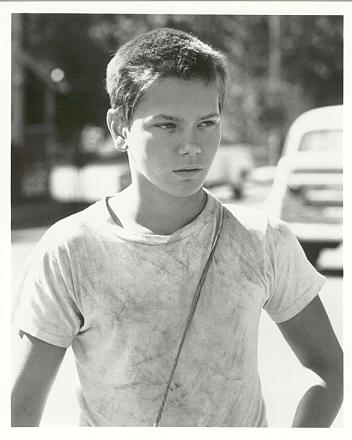
There was also this blond boy in the movie, who was the best friend. Even though he was pretty rough-looking in the movie, he was so beautiful that I couldn't keep my eyes off him whenever he was on screen. I was really eager to see the credits to find out his name, whether he acted when he grew up, whether he was as attractive as an adult, etc.

Then the credits: River Phoenix.

Wow.

See, when I was but a young lass, a freshman in high school, so about 14 years old, my best friend Susan had a poster of River Phoenix on one wall of her bedroom, and one of Johnny Depp on the other. I remember sleeping over at her house, lying on sleeping bags on the floor, and talking about fine they were, and which one we liked better. We both liked River Phoenix better. He was pretty much the finest guy I could imagine. (Ultimately, I said she could have River Phoenix and I would take Johnny Depp, since they were her posters, after all.)

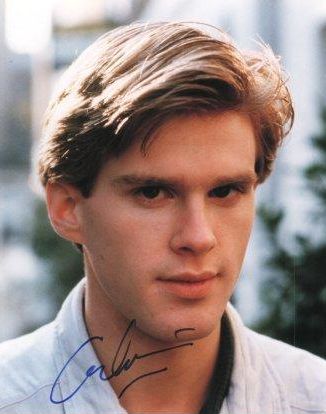
Sally and I were talking lately about the fact that I don't really have an anti-type (vs. Sally, who for instance doesn't like men who look have that Jesus look with long hair and sandals), and Drew has been wondering what my type is, which I agree is hard to pin down. But I'll tell you that when I was in high school, River Phoenix was my type. (When Cary Elwes came along, he was right up there as well. Dreamy.)

River Phoenix died the year after I graduated from high school. I wonder if he would have stayed crazy hot or gone more of a Leonardo DiCaprio route. This picture is chosen to best reflect what I think I would have found hottest as a youth, although to be honest this still makes me catch my breath a little:


Bonus Cary Elwes:

Weight Watchers vs. MyFitnessPal

I've been doing Weight Watchers lately. I haven't told most (hardly any, actually) of my local friends about this, because I always feel private about trying to lose weight. It's also ridiculously boring for other people to hear about, I think, and sort of tedious and typical.

I told one local friend other than Ed - the one I'm closest to. I told her I wasn't going to tell anyone else, not because it was a secret (I didn't want her to feel obligated to keep it as a secret, because that's always a burden and this isn't very important), but just because I didn't want to talk about it with anyone else. But it's good to have a couple of friends for support.

Anyway, where was I? Oh, yeah. Websites.

Weight Watchers is pretty cool these days. I just do it online. They still have a program based on "points" which are calculated for a food based on its protein, fiber, carb, and fat content. In reality, it works out to about 1 point per 40 calories, though WW doesn't want you to think that way. Non-starchy vegetables cost no points and, even more astonishingly, neither do any fruits (except avocados).

You get a daily points allowance, and then you also get this weekly pool of points that you can use for extras. You can have a few of these every day or you can have them all at once if you want to.

I really like the program. They reduced the points totals to allow for what they think will be typical fruit/veg consumption, and the free fruits really encourage you to snack on fruit, vs. forcing you to choose between a banana and a 100-calorie snack pack of mini-oreos, where most people will choose the oreos, which is clearly not the way to go for overall health and well-being (or, most likely, satiety). And I like the pool of weekly points - it really helps me manage social occasions and things like that.

Recently, the site myfitnesspal was recommended to me. It is a dieting site based purely on calorie-counting (or you can track whatever nutrients you want). Unlike Weight Watchers, it's free (ad-supported). For about the past week I have been logging my food intake in both places.

The calorie budget that myfitnesspal gives me based on my various statistics and desire to lose 1 lb per week basically comes out to be the same as what WW gives me if you include the weekly points. (WW "requires" you to eat all of your daily points, but you can forgo the weekly ones if you wish.) Of course, WW lets me eat fruit on top of that allowance, and myfitnesspal does not. Myfitnesspal doesn't have any software-supported way for me to bank calories to eat on other days, either, or anything like that.

However, myfitnesspal does have a truly excellent food database, the easiest one to use that I've encountered since the tragic demise of BalanceLog. In addition to their database, users can enter foods for anyone to use, and other members can verify that the nutrition is correct. If 43 people agree that this entry for McDonald's fries is right, you can pretty much trust it.

In addition to these aspects, myfitnesspal has a community aspect. There are message boards, but, more importantly, it has the whole "friends" thing from Facebook. That part of the site is almost a direct clone of Facebook - you get a news feed of your friends' updates, which (depending on their preferences) will include posts when they log their food for the day, update their weight, etc. So if you have friends on the site, you can get a ton of social support. Also, if your friends' food diaries aren't set to private, you can go see what they ate every day, which is fun if you like that sort of thing.

I'm considering abandoning WW (esp. since it costs money) and just using myfitnesspal. I want to continue enjoying the social aspects of myfitnesspal in any case, and it would be nicer to only be using one site rather than two.

What's a little sad for me is that I really do like and prefer the WW program itself. I like the points and the weekly extra points and the free fruit and all of that. It sort of turns the whole thing into a game rather than being more of a dreary regime. It takes things slightly out of the realm of reality.
But I feel like I can only really enter into the playful fantasy world of WW if I don't at the same time do actual calories. They don't layer well for me.

To be clear, I think these systems are pretty much equivalent in terms of the bottom line of encouraging the energy deficit that leads to weight loss - it's just a matter of what works better psychologically. And of course, one doesn't need to decide once for all time. But those are the issues I'm pondering right now.

Monday, May 30, 2011

Motivational Techniques

One of the hardest things I've had to do recently was study for my real analysis final exam. It was hard because I had a lot of things going on that week, and I was tired, and I did not want to do it, and it felt futile because I knew I could not master the material in the time available, even in a best-case scenario. That last thing made it especially hard.

Yet somehow I did study, at least enough that I got an A in the class.

I wrote a while back about negative motivation. It used to be that threatening myself ("if you don't study you're going to fail this class") was the only type of self-motivation I knew how to deliver, and of course that type of motivation is not really very helpful. Eventually you become immune to your own threats, and the truth is that even many important things don't come with immediate terrifying consequences (e.g., it is not true that if I eat this particular donut I will die of diabetes at a young age).

Ever since realizing that I always resorted to negative motivation, I've been trying to cease making threats to myself. Instead, I've been trying to remind myself of positive reasons to do what I should do ("I'll feel good when I get this homework done"). And that has been moderately successful.

But neither type of motivation was enough to get me to study for my analysis final. Instead, what I did was pretty continually push myself simultaneously with various different motivations, of all types. Among them (and yes, I talk to myself in the second person)
  • If you study enough that you can get 3/4 or more of the exam done, you'll feel pretty good about it afterwards (as has happened on the other analysis exams you've successfully studied for).
  • It's going to really suck to sit in the exam and not be able to write much for many of the questions. You'll feel really stressed and doomed in that situation.
  • If you get through this semester with good grades, you're going to feel really great about your chances in the program.
  • You have some good friends here - you don't want to let them down by failing classes or dropping out. To continue this happy lifestyle you need to be like them and actually do well.
  • If you finish strong, you can send an email to Dr. P (undergrad analysis prof who wrote me LOR's for grad school) and tell him you finished your first year including this analysis core sequence! (You'll feel sad if you can't send that email or if you can't report passing this class.)
  • You're really just pre-preparing for the analysis qual in August. You'll feel good studying for that if you already have this head start.
So, basically, thinking of a lot of creative good reasons to want to study or to want to avoid not studying really helped. I mean, it helped just enough. It was barely enough to get me to actually do the stuff I needed to do, and I needed to apply it pretty constantly over the days I was struggling.

Wednesday, May 18, 2011

Screw Index Cards

In my last post, I mentioned using index cards to write down the past qualifying exam questions. And I did indeed write about 50 of them before saying, you know what, screw this.

I'm now putting them into Access. You can't easily represent formulas in Access, so what I've done is set it up so that I put in TeX code for the problem statements, and then I wrote some code in Access so that it will spit out a TeX file with my problems (in a variety of orders).

I feel pretty awesome about that, and I've now entered about as many problems as I had written on index cards. The process is much faster and the results are way better.

Go me!

Saturday, May 14, 2011

Moving Right Along

This week I had three final exams and a project due, but everything was done by Tuesday afternoon. Wednesday, I flew somewhere to do a little bit of work for my old company, for a client I hadn't met before but who turned out to be someone who immediately strikes one as crazy and/or full of shit. I now have more work to do for this guy. I sort of wish I hadn't gotten involved at all, but I guess making some extra money is a good idea.

This summer I am also lined up to make about $3000 doing (paid by the hour) math lab and grading work. I think that comes out to about 140 hours (based on my guess of what the hourly rate is). I hope that instead of interfering with my summer plans, this work will help keep more organized and moving along. (Have you noticed that it is easy for a day with no fixed plans to glide competely by with nothing to show for itself?)

My main goal this summer is to pass my real analysis qualifying exam in August. It's an 8 hour long, written exam. I think there are typically 12 questions, of which you choose 8 to complete. They are typically rather meaty questions, though not usually very novel. (An example might be, "State and prove [famous theorem].") My understanding is that you need to get 6 completely right in order to pass.

I'm worried about whether I can pass this exam, even under ideal conditions and having studied a somewhat large amount, but I need to, as they say, give it the old college try. I have a stack of the old exams (going back so far that the earliest ones are handwritten). The first thing I intend to do is write questions on index cards. I want to determine what types of questions are asked, which questions are asked most often, and so on. If I can at least have answers to the most commonly asked questions down cold, it should help, and of course there is a lot of overlap of material and technique between different ones, so it's helpful in general.

In undergrad, I had a professor who would always point out, when we were starting a project, that you always wish, at the end, that you had an extra day or so, and so you ought to make very good use of the first few days (the ones you might otherwise kind of blow off, feeling that you have plenty of time). I have thirteen weeks before this exam, so I'd best get started.

Wednesday, May 11, 2011

Why We Get Fat

A few months ago, I read Gary Taubes's Why We Get Fat: And What to Do About It. I've been wanting to comment about it ever since. I found parts of the book very convincing and others less so.

Taubes is a low-carb (practically no-carb) advocate, which is always suspect. The book presents a pretty strong argument against the view that people are getting fat because they eat too much and exercise too little.

I was amazed and convinced by the way that Taubes argues agains the "calories in, calories out" way of thinking about weight change. It's not that he disagrees that you gain weight by taking in more calories than you expend; it's just not a useful way of looking at it, because it doesn't answer the question of why that is happening.

By way of analogy, if you were in some particular room in a museum and after a while you noticed that the room was becoming very crowded, you might ask your companion, "Why is this room getting so crowded all of a sudden?" It would be true but not at all helpful for your companion to answer, "More people are coming in than are leaving." That's how Taubes views the calorie situation.

He points out that, for instance, children gain quite a bit of weight as they mature, yet this is not because they take in more calories than they expend. Obviously they do, but the causality goes the other way - they take in more calories than they expend because they are driven to grow. Similarly, adolescent girls develop fat deposits on their chests and hips, and this is not because they are eating more than they need; they eat more because biology pushes them to in order for them to develop secondary sexual characteristics.
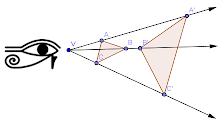
He also points out that something like a 35-calorie-a-day difference (a bite of a brownie, basically) adds up over a 30-lb weight gain (or loss) in 10 years. Given that math, how is it possible that so many people do maintain a consistent weight?

Obviously there are processes in our bodies that balance our food intake and energy expenditure. Experiments with rats show that at least some types of rats can stay fat or thin (according to genetic predispositions) on various amounts of food by modulating their energy expenditures. This is presumably not because the skinny rats read Vogue and the fat rats watch too much television.

Taubes then presents his case that the reason people are getting so fat now is that we're eating so many carbs. His line of reasoning involves insulin regulation. If I remember correctly (which I may not), the basic idea is that eating more carbs causes our bodies to produce more insulin, and insulin promotes fat storage, which is to say it causes (basically) our fat cells to become hungry and thus prompt us to eat more so that they can grow.

I find that argument reasonably convincing. What I found less convincing is Taubes's line of reasoning that goes something like, "Everyone in the past knew that you lose weight by cutting down on starches, before all this low-fat bullshit came along." I agree that the low-fat craze of the 80's/90's was mostly b.s., but I don't find it that meaningful that people have historically known to cut back on starches. It's pretty obvious if you consider what people usually eat (even in the past) that we're much more likely to overeat bread, rice, potatoes, pasta, desserts, etc., than we are to gorge on meats. And of course it's almost impossible to overindulge in veggies. (Most people historically probably couldn't even afford to overeat meat. Also, it's much more fun to overeat starches, IMO.) Of course, that's on top of the general thing that citing the wisdom of the past is always selective.

Taubes's ultimate recommendation is the standard Atkins type of diet, with extremely restricted carb intake. He justifies this partly in the common paleo way - apparently our caveman ancestors mostly ate corn-fed beef from the Safeway, and we should too.

I find the general recommendation to cut back on starches pretty convincing, but I don't find that cutting all of them from my diet is any easier or more possible than keeping myself on a general starvation regimen that makes it impossible to gain weight anyway (even as one of the fat rats). A mostly-meat diet is expensive and, after a while, sort of disgusting, and it's obviously not at all environmentally sustainable.

I also, of course, know plenty of skinny vegetarians and vegans, who are clearly eating very high carb diets, suggesting that there are various types of diets on which one can maintain a healthy weight (even effortlessly, if you're lucky in that way). So...yeah.

But the book is probably worth reading if you're into this type of stuff.

Friday, May 06, 2011

The Problem with Moving

I've been thinking lately about the downsides of moving to a new place (whether it's a new state or a new country or whatever). Everyone is aware of the struggles around not knowing the conventions or how to accomplish things in the new place (which can range from how to get a license plate in Nebraska to the need to give bribes to bureaucratic functionaries in some countries or whatever), but I think there's another negative thing that isn't as obvious: the loss of features.

Every place has certain features that are positive. Texas has, for instance, Blue Bell ice cream, which is pretty great for a non-premium brand, and Tex-Mex, and South by Southwest. New Orleans has Mardi Gras. Colorado has skiing.

But often the best "special" features of a place are not very accessible. Sometimes a new resident wouldn't know that the feature exists (like you might not notice Blue Bell ice cream and think to try it). Sometimes the feature is an acquired taste (as Tex-Mex might be). And sometimes the feature is something that can be enjoyed much more thoroughly (or at all) if you grew up with it, like Mardi Gras. (As a kid, we were thrilled to get beads and doubly-thrilled by doubloons. Mardi Gras was a whole season with parades all the time, not just one day in the city but on weekends in the suburbs as well. I knew a kid who moved to New Orleans and thought the whole thing was stupid - little cheap aluminum coins? Who needs it?)

So when you move, basically you lose all of the special features of your old place, yet can't fully appreciate the special features of the new place.

The grocery store is kind of a microcosm of this experience, and it's kind of what brought it to my attention when I moved back to Texas. If you're just moving within the U.S., then your old store will have had major national brands of everything, plus better local brands of some things. The new place won't have the old better local brands, and its own local brands won't look familiar or inviting, so you'll only have the least common denominator of big national brands to choose from.

Groceries are even worse if you move internationally, of course. I read a blog post sometime about living as an American in China. Apparently breakfast cereal is really expensive there, so that would be diminishment of your quality of life. I guess it's not what Chinese people traditionally eat for breakfast, though, so it's not that they suffer under the yoke of expensive Cheerios so much as that Cheerios is a weird foreign luxury item. So basically if you want to live cheaply and comfortably in a foreign country you have to either try new, weirder things or else stick to very basic things that are available everywhere (produce, meats, etc.)

I think we've all known people who have moved to wherever we live and then proceeded to hate it for not having the right features (like Sally's college roommate who lamented the lack of real bagels down here). I was like that when I moved to Houston from New Orleans as a kid, and I wish someone had encouraged me to have a different attitude about it. I think if you can be a little bit adventurous and non-judging, you can probably have a better time in a new place. And if you're flexible enough to live like the locals, you might have a very good time indeed.

Tuesday, May 03, 2011

Jerk

There is an older grad student in my department who I am pretty well convinced by now is a jerk. I've heard of various jerky behaviors, but the most egregious (to me) is that he's made a friend of mine, who is a fairly gentle person, upset on several occasions, always by criticizing and/or yelling at her about ways that he thinks she has slighted him or not treated him with proper consideration. None of his complaints have seemed valid to me in the slightest. (For instance, on one occasion my friend canceled a weekly get-together with him because she had out-of-town guests.)

I've expressed my opinion that he is just a jackass, and she basically agrees. "But," she told me, "I really don't think he knows that he is being a jerk."

The idea of this as an excuse sort of fills me with rage. Most people, after all, have no problem justifying their behaviors to themselves. Most people do not set out deliberately to cross boundaries or be jackasses. So it is practically the definition of being a jerk to not know, or not be aware, when you are doing something wrong/mean/rude/whatever. One of the jobs of a human being is to actively prevent oneself from being a jerk, which often involves being aware of other people's feelings and perspectives, actively curbing one's natural self-centeredness and inclinations, and so on.

I mean, you know, I'm glad he isn't intentionally evil. But that's not really saying much.

Monday, May 02, 2011

Saturday, April 23, 2011

Lifestyle, Redux

I posted a long time ago about Brooks Brothers ads. Lately, this one has been catching my eye:


All I can say is wow.

Friday, April 22, 2011

Potluck Success

I normally don't enjoy potlucks very much. I'd rather eat out than eat a bunch of random food prepared by other people, and I'd rather pay for a restaurant meal than have to make something (which often ends up costing me as much as a restaurant meal anyway). I also hate the hassle of how it's impossible for everything to be served warm/cold/whatever. I am just a grump about them.

However, I was invited to a Passover seder last Sunday. The host made a fine brisket as well as matzo ball soup, and we were asked to bring a side item, dessert, or drink, etc., made without leavened flour and without pork or shellfish or both meat and cheese, etc. So it was kind of a semi-potluck, but a great opportunity to participate in a seder, so that was all right.

I decided to roast some brussels sprouts. I'd never tried this before, but it seemed like it ought to work, and the Internet seemed to agree. At the store, there were boxes of fresh sprouts that were not as fresh as I would have liked, and then there were these enormous stems of sprouts which were much fresher (presumably because the stem sustains them).


This thing was amazing - huge and bulky, like a big club made of brussels sprouts. And it had way plenty of sprouts on it for roasting. Cutting them off wasn't much extra work since you normally have to trim the flat end anyway.


It was $4.49.


So I cut the sprouts off, tossed them in olive oil and salt, and roasted them at 400 degrees for about 40 minutes (whole). Cutting them in half would probably have been more delicious, but I was actually running out of time.


I don't have two ovens and I wanted a warm dish to transport these in (I was afraid a cold vessel would coldify them right away), so when they were getting done, I poured boiling water into a lidded casserole dish. When the sprouts were done, I poured the water out, dried the dish thoroughly, and put the sprouts in. I carried the casserole dish to the seder wrapped in a towel, and I got the hosts to put their oven on warm as I drove over, so I could pop it right in the oven when I got there.


The ritual part of the seder went on for a while, so by the time we ate, my sprouts had been kept warm in the oven for perhaps 45 minutes. This is not an ideal situation for maintaining any kind of roasted quality, but when we ate them, they were still delicious - not totally toasty but still considerably different from boiled or steamed sprouts. I got a ton of compliments both from people who like brussels sprouts and from people (well, one person) who had previously regarded them with fear.


I felt pretty kick-ass at bringing a healthy, well-liked dish that cost me under $5 to make.

Thursday, April 21, 2011

Non-Zero Probability

It now appears that there is a non-zero probability that I will finish the semester. For the first time, I can actually see the end from here. We have two more weeks of classes, and then finals, but I had a big exam today and really couldn't see past it until it was over.

In some ways, the class I had the exam in was my most important one (real analysis, which I'm taking a qual in this summer), and of my four classes, it has gone the worst. There is a lot of material I really struggle to understand, and what I do understand, I have trouble holding on to from moment to moment. Studying for the exam did greatly increase my knowledge, but there were topics I couldn't study because I just couldn't face them. And yet...the qual.

I'm feeling better now, but the past couple of days I have felt pretty down on school. As happened during the stressful part of last semester, I found myself fantasizing a lot about quitting and going back to my old job (I think they would hire me back, but I could probably get a similar job in any case) and having an easier life with more money and not as much math. I think that terrible negativity might be passing now, which would be nice. Most of the time, I prefer my life here to my old life by a moderately large margin.

I actually probably did all right on the exam. Last semester, I got a 55% on the midterm and ended up (somehow) with an A in the class. I estimate that I got about a 70% on this one. If I do a good job on the final, I should be able to at least pass with a B, I think. (If I fail the class, all hope is not lost, but passing would be better, of course.)

I posted a while back about my doom-laden decision to take four courses this semester. I'm happy to report that that decision, at least, was not in fact a mistake. Reports of my impending doom turned out to have been exaggerated. The logic class has been very interesting and our professor dramatically decreased the workload relative to the first half, and the topology class has been as vital as I'd thought it might be, and I'm really glad that I had the opportunity to take it.

So, that's my life these days, anyway.

Tuesday, April 05, 2011

Do Not Want

It seems to be the case that after a serious relationship ends, I discover that certain aspects of it are things I do not want in any future relationships. Some of these are senseless allergies (omg no more Alex Chilton fans!!!*) but others, I think, are legitimate discoveries. It's hard to know how living with someone who does x or y or believes z will turn out. Sometimes I was blind to signs that I can now recognize, and others times, it just requires playing the experience out all the way to find out how it goes.

One thing I learned from my relationship with Ed that I don't want anymore is a little bit subtle, but important. One of the very noticeable features of Ed early on was that he was very emotionally literate (which I really appreciated, and continue to think is cool) and wanted to understand in minute detail what I was thinking and feeling about various aspects of the relationship. He didn't feel safe if he didn't understand my exact feelings.

This went both ways. If Ed found a feeling in himself that he thought might be a deal-breaker or bad news for me, he always told me about it. He was very open with me (which is a good thing, in general) and scrupulously honest, to the best of his ability.

All of this is why "radical honesty" was a tenet of our relationship.

I'm not against radical honesty. I think as an experiment it's fun. In fact, as long as you remember that it's called "radical" for a reason, it's all good.

But I don't want to be in another relationship with someone for whom that is of prime importance. I want my future partners to trust me to manage my own thoughts and feelings. I want them to trust that I'll tell them what's important, but be content with my being somewhat of a black box. I want to be with someone who doesn't worry about it that much, and/or who just figures me out as we go along. And I want to be with someone who manages his or her own inner thoughts and emotions as well, sharing as appropriate or desired but sometimes holding things back that are counterproductive to share.

(* not actually on my list)

Monday, April 04, 2011

Strange Advertisement

A few blocks down from my apartment is a big complex that is mostly inhabited by students at my school. Out front is a sign that caught my eye a few weeks ago because of its nonsensical slogan:


Live like you "Mean" it!

It's a weird slogan to begin with (don't I really mean it? how am I living now? what does it mean to mean living, anyway?), and not improved by the scare quotes.

Then I started looking at the picture more closely:


Now, here we have these four...college students, I guess. But this picture is so weird. Notice the following:

  • At least three, possibly all four, are wearing oversized sunglasses.
  • Both of the boys are carrying helmets.
  • Three of them are wearing large headphones of the kind people use almost exclusively at home.
  • All humans come in couples.
  • The way a couple walks is that the boy puts his arm around the girl and then she reaches up near where her neck and his arm meet.
  • The boy on the left is wearing a sleeveless hoodie and a very slender bracelet.
  • The boy on the right appears to also be wearing at least one, and possibly two, bracelets.
  • 75% of the people pictured are wearing hats. (Note that both boys are wearing hats in addition to carrying helmets.)
  • At least one girl has rollerblades; both boys seem to have skateboards attached to their backs.
  • The girl on the right is disturbingly narrow from the waist down, and has the hips of an 11-year-old boy.
Who are these people? Why are they all dressed/accessorized so similarly? Are they living like they "mean" it?

Sunday, April 03, 2011

Wikipedia and Math

I am a relatively big fan of Wikipedia. It tends to be my go-to source for things I want to know that are of a general nature - for instance, when I finished Bleak House the other day, I read/skimmed the Wikipedia articles on Charles Dickens, Bleak House, and the Chancery court that is such a big feature of that book.

But for professors in many disciplines, Wikipedia is a kind of sore spot, because students will often try to cite it. Not only is it generally inappropriate to cite an encyclopedia in a college class, Wikipedia is extra-suspect since anyone can edit it, and so it may or may not be rife with errors. (Everything in life is full of errors, really, but at least published encyclopedias have editors.)

But in math, people seem to like Wikipedia a lot. Several of my professors have referred to looking up things in Wikipedia themselves before presenting them in class, or to using it in general.

In fact, a few weeks ago, we had a visitor from the NSA who came to talk about careers there. It came up that of course (for security reasons) they don't have Internet access at their workstations there. I asked the woman how they did math without Wikipedia, and she immediately replied, "Oh, we have our own copy of Wikipedia." She didn't seem to find the question bizarre (like if I'd asked, "Oh, how do you do math without Facebook?")

I think there are some legitimate reasons why Wikipedia is different for math than for other subjects.

First of all, I imagine that when, say, history professors read Wikipedia, they find errors that irritate them. (This is probably true of many encyclopedias as well, but I doubt it comes up much that professors read encyclopedias.) You can make a lot of factual errors in history, or you can simply write an article that is unbalanced - that goes into a lot of detail on one small point and completely fails to include other major points. This is especially likely if the topic is controversial.

In math, on the other hand, there are not so many facts. When you look up a math topic in Wikipedia, you want to answer questions like
  • How is this thing defined?
  • What areas is it used in?
  • What are some theorems about it?
  • What are the different notations or ways that it is conceptualized?
You might think of definitions as being akin to facts, but actually they're quite flexible. It's true that some things are simply NOT the definition of an algebraic group, for instance, but there are several different definitions to choose from, and you can do math from a lot of different standpoints or bases.

I commented to Ed the other day that, unlike in other fields, in math it's the facts (definitions and axioms) that are matters of taste or opinion, and the conclusions drawn from those facts (theorems, etc.) that are either right or wrong.

The second reason I think Wikipedia is different for math is that, honestly, it's difficult to abuse it. You can't read and understand a Wikipedia math article unless you actually know enough math that any errors are probably not going to be dangerous to you. Is there a proof that is erroneous? You should be able to tell. (Nobody sophisticated enough to read proofs in Wikipedia should be foolish enough to treat any proof as authoritative.)

So if you were going to write a paper about Hausdorff spaces and you looked up the Wikipedia article and started there, it wouldn't really hurt you any. Either the definition in the article would work for you as a starting point in your research or it wouldn't. Once you know generally what's being discussed, you can make up your own definition if you want (though of course if it's not roughly equivalent to a commonly-used one, you'll only confuse your audience by calling it "Hausdorff"). You don't need a source for a mathematical definition, so you're not likely to mistakenly cite Wikipedia.

So, math Wikipedia - all upside, no drawbacks (if you can read it at all).

As a side note, my ability to read Wikipedia articles in math has absolutely skyrocketed since I started grad school. I'm actually starting to get enough background in the various general areas of mathematics for these things to make sense.